
Crime
D-Syndicate looking to expand narco trade into Southern and Northeastern routes, warn Intelligence agencies


New Delhi, Oct 30: In recent months, the Narcotics Control Bureau (NCB) has been cracking down heavily on the Dawood Ibrahim-linked drug network in India.
The arrests of Danish Chikna and Mohammed Salim Sheikh have dealt major blows to the Dawood network, and this has prompted the syndicate to look for newer avenues.
As Intelligence agencies continue to focus heavily on the networks in Maharashtra and neighbouring states, the D-Syndicate is looking to expand its networks in the northeastern and southern states of India.
Action would be taken similarly in these parts of the country. However, it is necessary to bust the networks in states such as Maharashtra and Gujarat, which have been the traditional playground of the syndicate for a long.
While Dawood Ibrahim has diversified his business in various parts of the country, the command centre remains in Maharashtra.
The people working for the network in this sector control the businesses across the country, and hence, breaking their backs first is important. This would eventually lead to the weakening of the networks in other parts of the country.
Operations in the northeastern and southern states are currently overseen by Haji Salim, an ISI stooge and a member of the Dawood network.
Salim has been playing a big part in the D-Syndicate after Dawood’s right-hand man, Chhota Shakeel, has gone mysteriously quiet.
With Dawood’s brother Anees Ibrahim put in charge of the International wing, which does business mostly in African nations, the onus of the Indian markets has largely fallen upon Salim.
According to Intelligence agencies, the ISI and syndicate have now instructed Salim to focus entirely on the southern and northeastern sector as they feel that there is a major potential.
The syndicate sees potential in the northeast owing to the existing routes from Myanmar. With Bangladesh opening up completely to the ISI, the syndicate sees further potential in this sector.
In the South, the syndicate’s network exists. However, this network has largely focused on smuggling drugs out of the country. The narcotics would first be smuggled into the southern states, especially Kerala and Tamil Nadu, and later, to the international markets such as Thailand through the Sri Lanka route.
An Intelligence Bureau official says that the syndicate is also looking to bring in more drugs through Sri Lanka before distributing it in the Indian market.
While the international market is huge for the syndicate, it is not ready to let go of India, as demand is huge.
The syndicate not just wants to cover its losses in Maharashtra, but also the ones it is incurring in Punjab.
Several attempts to bring in drugs through the Punjab route using both couriers and drones are failing owing to heavy scrutiny and security. Hence, the Dawood network wants to take maximum advantage of the southern route so that it can smuggle drugs in huge quantities and then distribute them to the Indian market.
To bring in drugs from the international market, the syndicate would use the route from Sri Lanka. The network would look to smuggle the consignment into Tamil Nadu and Kerala before supplying it into the Indian market.
According to officials, the network feels that this would be an easier route, as most of the consignments in the Indian market will be transported via land route.
The scrutiny at the southern international borders is relatively less when compared to the borders along Punjab or Jammu and Kashmir. Further, using the land route to smuggle drugs into India would also attract less scrutiny, and the syndicate hopes there would be more hits than misses.
Another official also pointed out that the D-Syndicate is also tapping into the illegal immigrants who have settled in South India in huge numbers. They could be used as carriers to supply the drugs into the Indian markets, officials also warned.

Crime
Anti-Terrorism Branch Busts Hawala Racket In Malad East, Detains Man With Fake Passports, Foreign Currency; Terror Funding Angle Probed

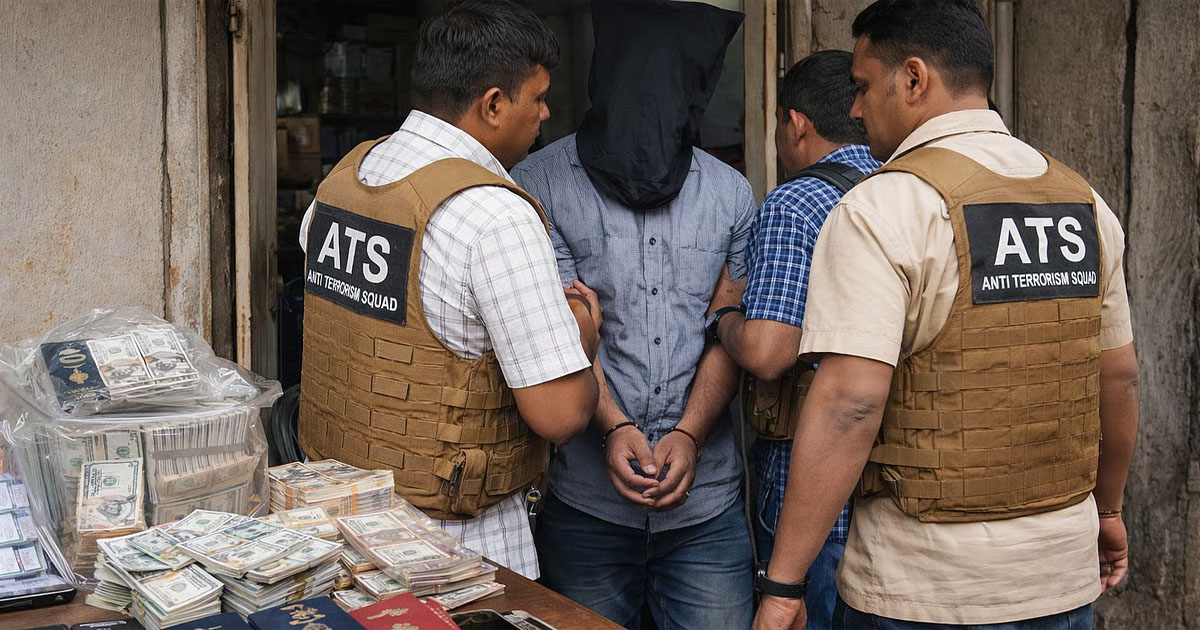
Mumbai: The Anti-Terrorism Branch (ATB) of the Special Branch busted a hawala racket after coordinated raids at three locations in Kurar, Malad East, on Wednesday. One accused, Mohammed Islam Ismail Khan alias Salim Rahmatullah Shaikh, 49, has been detained for questioning. An FIR has been registered at Kurar Police Station against accused Mohammed Islam Ismail Khan under Sections 318(4), 319(2), 336(3), 337, 340(2), and 180 of the Bharatiya Nyaya Sanhita (BNS), along with Section 12(1)(b) of the Passports Act, 1967, and Sections 3 and 13 of the Foreign Exchange Management Act (FEMA), 1999.
The raids were conducted at Flat No 1302, Fatema Tower, Pathanwadi; Flat No 904, D-Wing, Sugra Park, RS Road; and a ground-floor office in Parekh Overseas building, all in Malad East.
During the operation, officials seized cash worth ₹12.5 lakh, foreign currency worth around ₹2 lakh in Kuwaiti dinars, multiple fake passports, nine mobile phones, a laptop, an iPad and larg number of documents, including bank wire transfer records.
Preliminary investigation revealed that the accused had been residing in Kuwait for the past 22 years and frequently visited Mumbai for short durations of two to three months. He allegedly owns three laundry businesses in Kuwait and operates two offices in Mumbai.
Police sources said multiple passports were fraudulently obtained under different identities, two in the name of Mohammed Islam Ismail Khan and three in the name of Salim Rahmatullah Shaikh.
Authorities are probing a possible terror funding angle linked to the hawala operations. The detained accused is being questioned, and the process of registering a case at Kurar police station is underway. Senior Police Inspector Umesh Patil confirmed the development.
Crime
21-Year-Old Arrested By Mumbai EOW For ₹13.17 Crore Fraud In Unlisted NSE Share Transactions; Complainant Paid ₹25.30 Crore
Mumbai: The Economic Offences Wing (EOW) of Mumbai Police has arrested a 21-year-old accused in connection with an alleged ₹13.17 crore cheating and criminal breach of trust case involving transactions in unlisted shares of the National Stock Exchange (NSE).
The accused has been identified as Heet Bhavesh Shah (21), a resident of Mira Road–Bhayander. Police sources said Shah is educated up to Class 12 and had undergone training in share market broking. He reportedly aspired to become wealthy through stock market dealings.
An FIR in the matter was initially registered at MRA Marg Police Station, and the probe was later transferred to the EOW for detailed investigation. The complainant, Harith Naginidas Kampani (59), a share consultant operating from Dalal Street, Fort, has been engaged in unlisted share broking and conversion of old physical shares into demat form for the past seven years.
According to the FIR, Kampani stated that he was acquainted with Shah, who also dealt in unlisted shares and operated from the same building. In the first week of June 2025, Shah allegedly informed Kampani that he had unlisted NSE shares available for sale.
On June 8, 2025, Kampani placed an order for 1,00,000 unlisted NSE shares for his clients. Shah quoted ₹19 crore and assured delivery within two days of receiving payment. Accordingly, Kampani transferred ₹19 crore to Shah’s bank account on June 11, 2025.
Subsequently, Kampani placed an additional order for 20,000 unlisted NSE shares—13,700 for clients and 6,300 for himself—for a total of ₹3.50 crore, which he transferred between June 3 and June 12, 2025.
However, despite repeated follow-ups, Shah allegedly failed to deliver the shares and cited various excuses. Following persistent demands, Shah returned ₹11.40 crore on June 16, 2025, and ₹2.5 lakh on June 18, 2025—totalling ₹11.425 crore—but failed to refund the remaining ₹11.075 crore or deliver the shares.
In September 2025, Shah allegedly claimed he was arranging funds for corporate clients and would soon receive brokerage commissions, promising to clear the dues. Trusting him, Kampani transferred an additional ₹2.80 crore on September 1, 2025.
However, Shah returned only 25 lakh unlisted shares of the Metropolitan Stock Exchange of India (MSEI) worth ₹70 lakh on September 3, 2025, and failed to repay the remaining amount.
Despite repeated demands, Shah allegedly continued to give false assurances. The complainant has alleged that Shah misappropriated the funds for personal use and deliberately deceived him.
According to the complaint, Shah collected a total of ₹25.30 crore under the pretext of selling unlisted NSE shares and cheated the complainant of ₹13.17 crore by neither delivering the shares nor refunding the money. Further investigation in the case is ongoing.
Crime
Scam Alert! Fake Loan Recovery Gang Chases Mumbai Motorist On EEH; No Case Filed After Alleged Political Intervention Claim
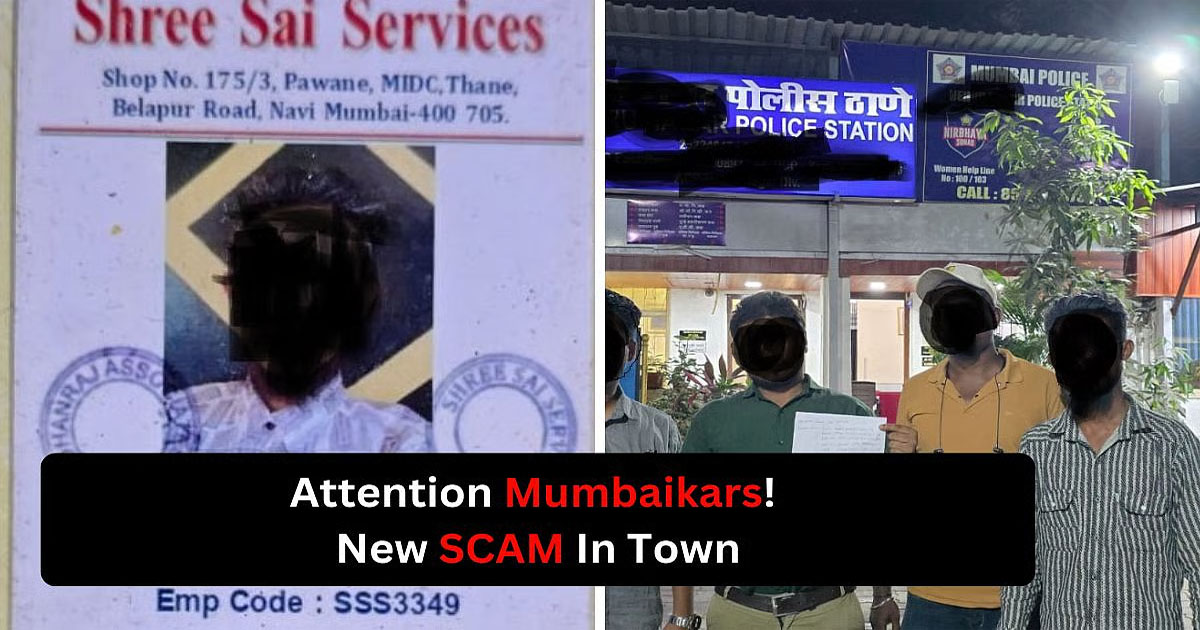
Mumbai: A disturbing case of alleged harassment and attempted fraud has surfaced in the city after a motorist claimed he was chased by a group posing as loan recovery agents on the Eastern Express Highway. The incident, which took place in broad daylight, has raised concerns about public safety and the handling of such complaints by authorities.
The victim, Sarabjit Chadha, shared his ordeal through a detailed thread on the social media platform X, describing how he was pursued by five unidentified men riding two motorcycles around 4:45 pm. According to Chadha, the men attempted to force him to stop his car by alleging that he had unpaid loan dues and pending EMIs linked to his vehicle.
Chadha maintained that the claims were entirely false, stating that his car carries no outstanding loan. When he refused to stop, the men allegedly began chasing his vehicle aggressively, engaging in dangerous driving and intimidation tactics in an apparent attempt to coerce him into pulling over.
Fearing for his safety, Chadha drove directly to the Chunabhatti police chowki. Upon noticing the presence of police personnel, two of the alleged pursuers reportedly fled the scene. The remaining three individuals stayed back and attempted to justify their actions by presenting details on a mobile application, claiming it showed a loan linked to Chadha’s vehicle.
However, Chadha pointed out a discrepancy, while the vehicle registration number matched, the app identified the car as a Honda City, whereas his vehicle was of a completely different make. This raised further suspicion about the authenticity of the claims and the intent of the group.
Police personnel initially responded by calling for backup. One of the accused fled, while another allegedly began apologising. The third individual reportedly made phone calls as the situation escalated. Chadha was then taken to the police station, where one of the suspects was briefly detained and others were asked to produce identification and vehicle documents.
The situation took a turn when one of the men who had fled earlier returned with a group of more than six individuals, including a person allegedly linked to a political party. Chadha claimed that following their arrival, the approach at the police station shifted. Instead of proceeding with a formal complaint or filing a non-cognisable (NC) offence, he was reportedly persuaded to settle the matter.
After nearly four hours at the police station, Chadha said he was mentally exhausted and under pressure due to concerns from his family. He eventually agreed to accept a written apology from the accused and no official complaint was registered.
While Chadha later expressed gratitude towards the police for their initial assistance, the incident has sparked questions about organised road scams and the influence of external pressures on due process. Mumbai Police has not yet issued an official statement on the matter.

Pakistani forces’ drone strike kills one, injures dozens in Balochistan

‘Respected Modi ji, please save West Bengal’ poster at PM’s Asansol rally draws attention

Passengers Fume After 15-Coach Virar-Dadar Fast Local Fails To Stop At Bhayandar Station During Peak Hour Travel: Mumbai Local

Major Crackdown On Illegal Hawkers In Mumbai; Video Shows Clean-Up Drive Near Infiniti Mall In Oshiwara

Israel claims killing nephew of Hezbollah chief Qassem in Beirut

Married Mumbai Woman Mocked In Andheri Society Over ‘Lift Kissing’ CCTV Video, Files Police Complaint

LPG Crisis In Maharashtra: Cyber Crime On Rise Amid Shortage, 2 Women Lose ₹4 Lakh In ‘Gas Update’ Online Scam In Kalyan-Dombivli

Dhurandhar 2 Box Office Collection Day 1: Ranveer Singh Starrer Takes An Exceptional Opening; Crosses ₹100 Crore Mark

Mumbai Police Busts Fake Apple Accessories Racket In Ghatkopar, ₹16.33 Lakh Goods Seized; Six Booked

Thane Horror: Man Slashed With Chopper In Naupada For Refusing ‘Vargani’, Caught On Camera
-

 Crime4 years ago
Class 10 student jumps to death in Jaipur
-

 Maharashtra2 years ago
Mumbai Local Train Update: Central Railway’s New Timetable Comes Into Effect; Check Full List Of Revised Timings & Stations
-

 Maharashtra1 year ago
Mumbai To Go Toll-Free Tonight! Maharashtra Govt Announces Complete Toll Waiver For Light Motor Vehicles At All 5 Entry Points Of City
-

 Maharashtra2 years ago
False photo of Imtiaz Jaleel’s rally, exposing the fooling conspiracy
-

 National News1 year ago
Ministry of Railways rolls out Special Drive 4.0 with focus on digitisation, cleanliness, inclusiveness and grievance redressal
-

 Maharashtra1 year ago
Maharashtra Elections 2024: Mumbai Metro & BEST Services Extended Till Midnight On Voting Day
-

 National News2 years ago
J&K: 4 Jawans Killed, 28 Injured After Bus Carrying BSF Personnel For Poll Duty Falls Into Gorge In Budgam; Terrifying Visuals Surface
-

 Crime1 year ago
Baba Siddique Murder: Mumbai Police Unable To Get Lawrence Bishnoi Custody Due To Home Ministry Order, Says Report