
Crime
Khabari: The Unsung Heroes Of Mumbai Police Intelligence

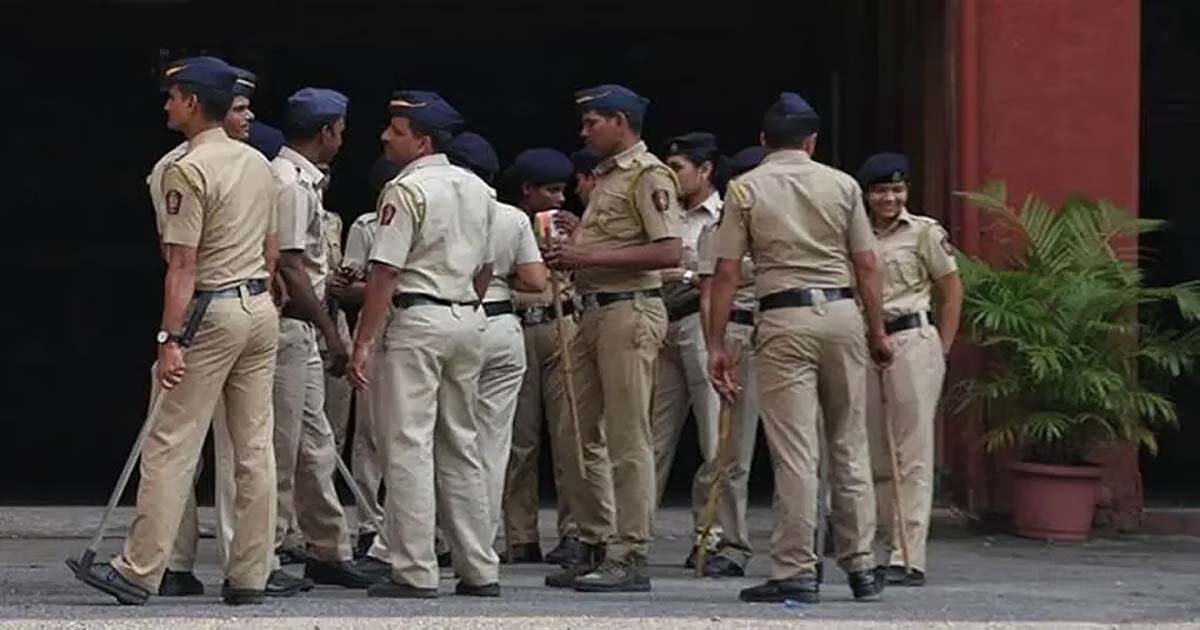
The term “Khabari” means informer, an indispensable part of every police force. While technology has transformed policing in today’s digital age, the importance of khabaris remains as strong as ever.
Some may question whether informers still hold the same relevance when advanced surveillance systems, digital forensics, and artificial intelligence are helping the police solve crimes faster. However, despite these technological breakthroughs, the role of human intelligence can never be replaced.
A khabari serves as the police’s eyes and ears on the ground. They provide crucial information about criminal activities, gangs, and suspicious movements, insights that no digital system can fully capture. Their tips often lead to major breakthroughs in investigations, especially in complex or sensitive cases where trust and human connections matter more than data. The khabaris as the backbone of crime control and investigation. From tracking drug networks to preventing gang wars, these informers quietly contribute to maintaining law and order.
There is a common phrase often seen in police press notes, “acting on a tip-off from a secret informer.” These “secret informers” are none other than khabaris. Within the Mumbai Police, there exists an entire world of informers, mysterious yet essential. The general public often forms its image of an informer from Bollywood films — a shady figure calling the police from a dark alley. In reality, the truth is far more complex and grounded.
Many khabaris come from ordinary walks of life, street vendors, rickshaw pullers, small businessmen, or paan stall owners. They share information about suspicious or criminal activity in their areas. They may not receive direct financial benefits, but being known to the police gives them credibility and a sense of security. Sometimes, it ensures that the police do not unnecessarily trouble their businesses. Some people even share information as a form of social service, though they are not considered professional informers.
However, those who provide information from within the criminal world are the true police informers. These individuals may have once been part of gangs, may have fallen out with their former associates, or may be ex-convicts trying to rebuild their lives. Some are even active criminals who maintain links with the police. In prisons, so-called ‘raw prisoners’ also serve as informants, passing on valuable details about criminal networks or planned activities. Sometimes, in certain matters, the informer is connected to politicians, businessmen, and the criminal world as well.
The identity of an informer is always kept strictly confidential for their safety. The police never reveal their names, even in successful operations or encounter reports.
Sudhakar Suradkar, a former IPS officer, stated, “Technology or machines can never replace human intelligence. In the digital era, these tools are only helpful, but ultimately, human intelligence remains the most important. For instance, the atomic tests conducted by India in 1998, during the tenure of Prime Minister Atal Bihari Vajpayee, were not detected by American intelligence agencies despite their advanced technology. Another key point is that an informer must be a credible individual. Some people accept money and provide information, but the police must identify their vested interests. Human beings can lie, which is why I never trusted petty informers; I always relied on credible ones. In the police force, the importance of informers will always remain, despite the growth of digital innovations.”
The history of informers in the Mumbai Police goes back decades. Smuggling was rampant in the 1960s, and rival operators would secretly tip off the police to catch competitors’ boats. That marked the beginning of the informer system. Over the years, informants have become an integral part of policing. During the 1980s and 1990s, when gang wars gripped Mumbai, khabaris played a crucial role. Their tips helped the police conduct encounters and dismantle underworld networks. Many of these informers risked their lives to assist the police during those violent times.
If informers provide information, what do they get in return? The answer lies in the economics of intelligence. Many informers are professionals; they earn their living by supplying credible information. The bigger and more valuable the information, the greater the reward. Some informers are even said to be on the police’s ‘payroll.’
In addition to monetary rewards, police departments often extend quiet support to informers and their families. If an informer is imprisoned or injured, officers may help their family financially. Such payments are made through a ‘secret fund’, an officially sanctioned fund used specifically to compensate informers for their services.
While technology has made policing faster and more scientific, the khabari continues to bridge the gap between street-level reality and official intelligence. Behind every major breakthrough lies a whisper from an unseen source, a khabari who risks everything to keep the city safe.
Street / Criminal Circle → Khabari → Police Officer → Action / Raid / Arrest
Former gang members
Street vendors / small business owners
Ex-convicts or prison contacts
Active criminals turned informants
Others (auto drivers, bar employees, etc.)
Police maintain a “secret fund” to pay informers.
The amount depends on the value of the information.
Payments are kept confidential to protect identities.
1960s: Start of informer culture during smuggling era
1980s–1990s: Rise of gang wars — informers vital in encounters
2000s: Informers track drug trade and organised crime
2020s: Digital policing + human intelligence = stronger results








Crime
Mumbai Fraud: 50-Year-Old Man Booked For Duping Mulund Resident Of ₹30.50 Lakh In Fake Railway Job, SRA Flat Scam


Mumbai, Dec 22: The Agripada Police have registered a case of cheating and financial fraud against Ramesh Balu Waghchaure, 50, for allegedly duping Bhimsen Amrut Nikam, 58, a Mulund resident, of Rs 30.50 lakh by falsely promising a railway job and an SRA flat for Nikam’s son, Shubham.
In a shocking twist, the accused allegedly arranged his daughter’s marriage with the complainant’s son and assured that the money would be returned after the wedding, which never happened.
According to the FIR, Nikam currently resides with his family on Gokhale Road, Mulund (East), and had earlier lived at Rasool Jeeva Compound, Sane Guruji Marg, Saat Rasta, from 1994 to 2023. Nikam’s wife, Suman, 51, is originally from Sinnar, Nashik, and the accused Waghchaure, a resident of Pathardi Phata, Nashik, was her former classmate. The families became acquainted during a relative’s wedding in Nashik in December 2017.
After building close relations with the Nikam family, Waghchaure allegedly claimed he had strong contacts in government departments. When Shubham completed his engineering in 2017 and the family began searching for a job for him, the accused reportedly promised to secure him a post of Senior Section Engineer in the Railways. He even introduced a person identified as “Khan” and, in April 2018, collected Rs 7 lakh via RTGS for the job.
Despite repeated follow-ups till 2019, no job was provided. The accused allegedly handed over a fake railway appointment letter and later promised to return the money, which he failed to do.
Around the same time, the Nikam family was looking to purchase a house. Waghchaure then claimed he had links with an SRA project and could arrange a flat at a lower cost.
The accused allegedly took Rs 21.50 lakh in cash and Rs 1.85 lakh through NEFT for an SRA flat, claiming that construction work was underway at Kanjurmarg. However, no flat was allotted, nor was the money returned.
To further delay repayment, Waghchaure allegedly proposed that if his daughter married Shubham, the entire amount would be repaid after the wedding.
The marriage took place on December 25, 2023. However, instead of returning the money, the accused allegedly cited financial difficulties and even took an additional Rs 15,000 from Nikam in February 2024. In total, Waghchaure allegedly collected Rs 30.50 lakh under the pretext of securing a job and an SRA flat.
Realising that he had been cheated, Nikam approached the Agripada police station and lodged a complaint. Based on the complaint, police have registered a case under relevant sections of the Indian Penal Code (IPC) and have initiated further investigation.

New Delhi, Dec 22: The Supreme Court on Monday stayed the conviction of senior Nationalist Congress Party (NCP) leader and former Maharashtra minister Manikrao Kokate in the 1995 Nashik housing fraud case.
A Bench of Chief Justice of India (CJI) Surya Kant and Justice Joymalya Bagchi issued notice to the Maharashtra government on Kokate’s plea challenging the refusal of the Bombay High Court to stay his conviction. Though it protected his membership in the Maharashtra Legislative Assembly, the apex court clarified that Kokate will not be allowed to exercise any governmental powers while the proceedings are pending.
“Issue notice. Meanwhile, the conviction of the petitioner shall remain stayed to the extent that there shall be no disqualification as a Member of the Legislative Assembly. However, no power shall be exercised by the petitioner,” the CJI Kant-led Bench ordered.
The relief from the top court comes days after the Bombay High Court had refused to stay Kokate’s conviction but suspended his two-year jail sentence and granted him protection from arrest as it heard his revision plea against the sessions court verdict.
Earlier, a Nashik sessions court had convicted Kokate in a case involving the illegal acquisition of government flats reserved under the Chief Minister’s quota and sentenced him to two years’ rigorous imprisonment along with a fine of Rs 50,000.
Following the sessions court verdict, Kokate was stripped of the Sports and Minority Affairs portfolios, and he resigned from the Maharashtra Cabinet. His resignation was accepted by Maharashtra Deputy Chief Minister and NCP chief Ajit Pawar amid a chorus from the Opposition.
The case against Kokate and his brother Vijay Kokate dates back to 1995 and pertains to the alleged misappropriation of flats meant for low-income individuals who do not own any other property.
The prosecution alleged that the brothers submitted forged affidavits and documents to acquire flats in the Nirman View Apartment at Canada Corner in Nashik. Investigations had also revealed that the brothers were using two additional flats in the same building that had been allotted to other beneficiaries.
Based on an inquiry by the district administration, Vishwanath Patil, then an official of the Urban Land Ceiling (ULC) department, lodged a complaint, following which a fraud case was registered at the Sarkarwada Police Station.
Since his induction into the Cabinet, Kokate has frequently courted controversy. He was earlier divested of the Agriculture portfolio following allegations that he was playing games on his mobile phone during a Legislative Council session.
Kokate denied the charge, but the episode drew widespread criticism. He also drew criticism for remarks on farmers and for attacking coalition partner BJP during a municipal campaign.
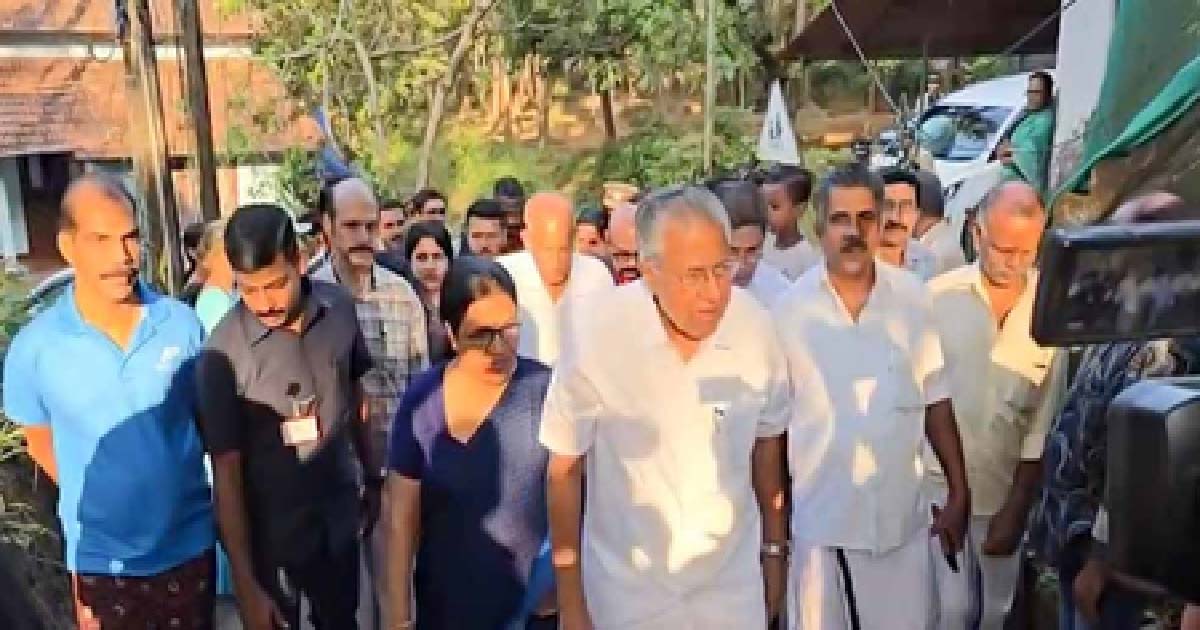
Palakkad, Dec 22: Chief Minister Pinarayi Vijayan on Monday assured justice to the family of Ram Narayan, the migrant worker who was beaten to death by a mob at Attappallam in Walayar and said strict action would be taken against all those responsible for the crime that has shaken Kerala.
In a statement on Monday, the Chief Minister said a special investigation team led by the Palakkad Superintendent of Police is probing the case and has been directed to examine all aspects of the incident and initiate appropriate legal action.
The government will also consider the matter and ensure suitable compensation for the bereaved family.
Calling the incident unacceptable, CM Vijayan said such acts tarnish the image of Kerala as a progressive society and stressed the need for vigilance to prevent a recurrence.
The Chief Minister’s remarks came as disturbing details emerged from the remand report, which revealed the extreme cruelty inflicted on Ram Narayan, a native of Chhattisgarh who had come to Kerala in search of work.
According to the report, the accused assaulted him with a clear and conscious intent to kill, subjecting him to hours of sustained violence.
Medical findings recorded ahead of the post-mortem showed more than 40 injuries across the body.
Severe head injuries, profuse bleeding and multiple grievous wounds were cited as the cause of death.
Investigators said heavy sticks were used to beat the victim, while marks on the body indicate he was thrown to the ground, kicked repeatedly and dragged. X-ray examinations confirmed that he was stomped on his face and back, pointing to prolonged torture rather than a single attack.
The remand report also notes that those who attempted to intervene were threatened and driven away.
Meanwhile, Local Self-Government Minister M.B. Rajesh, who hails from Palakkad, alleged that the attack stemmed from hate-driven politics, claiming the victim was targeted after being branded a “Bangladeshi”.
He said the government stood firmly with the victim’s family and would ensure maximum punishment for the culprits.
Five accused have so far been arrested, all of whom have criminal antecedents.
Police said efforts are underway to trace more suspects as the investigation continues.

Ara–Sasaram passenger train hits rotavator in Bihar’s Bhojpur

‘Avoid Sharp Attacks’: Maharashtra CM Devendra Fadnavis Warns BJP Leaders After Mahayuti Victory In Local Body Polls

Rahul Gandhi renews ‘vote chori’ charge during Germany visit, claims ‘full-scale assault’ on India’s institutions

SIR in Bengal: Each ERO to daily handle 150 claims & objections to draft voters list from December 27

‘Stolen Symbol, hollow claim’: Shiv Sena(UBT) attacks Eknath Shinde’s ‘real Sena’ assertion after local body polls

Kalyan College Namaz Controversy: SIO Demands Action Against Perpetrators

Sensex, Nifty open lower amid weak global cues

Veteran Bollywood Actor Dharmendra Passes Away at 89

Mukesh Ambani, Shiv Sena UBT Chief Uddhav Thackeray & Son Aaditya Share Warm Greetings At Mumbai’s Swadesh Event

Kartik Aaryan, Ananya Panday promote ‘Tu Meri Main Tera, Main Tera Tu Meri’ on Amitabh Bachchan’s KBC
-

 Crime3 years ago
Class 10 student jumps to death in Jaipur
-

 Maharashtra1 year ago
Mumbai Local Train Update: Central Railway’s New Timetable Comes Into Effect; Check Full List Of Revised Timings & Stations
-
 Maharashtra1 year ago
Mumbai To Go Toll-Free Tonight! Maharashtra Govt Announces Complete Toll Waiver For Light Motor Vehicles At All 5 Entry Points Of City
-

 Maharashtra1 year ago
False photo of Imtiaz Jaleel’s rally, exposing the fooling conspiracy
-
 National News1 year ago
Ministry of Railways rolls out Special Drive 4.0 with focus on digitisation, cleanliness, inclusiveness and grievance redressal
-

 Maharashtra1 year ago
Maharashtra Elections 2024: Mumbai Metro & BEST Services Extended Till Midnight On Voting Day
-

 National News1 year ago
J&K: 4 Jawans Killed, 28 Injured After Bus Carrying BSF Personnel For Poll Duty Falls Into Gorge In Budgam; Terrifying Visuals Surface
-
 Crime1 year ago
Baba Siddique Murder: Mumbai Police Unable To Get Lawrence Bishnoi Custody Due To Home Ministry Order, Says Report