
Business
Sensex crosses 81,000 Mark, Nifty Jumps 157 Points On Strong Metal & Auto Stocks

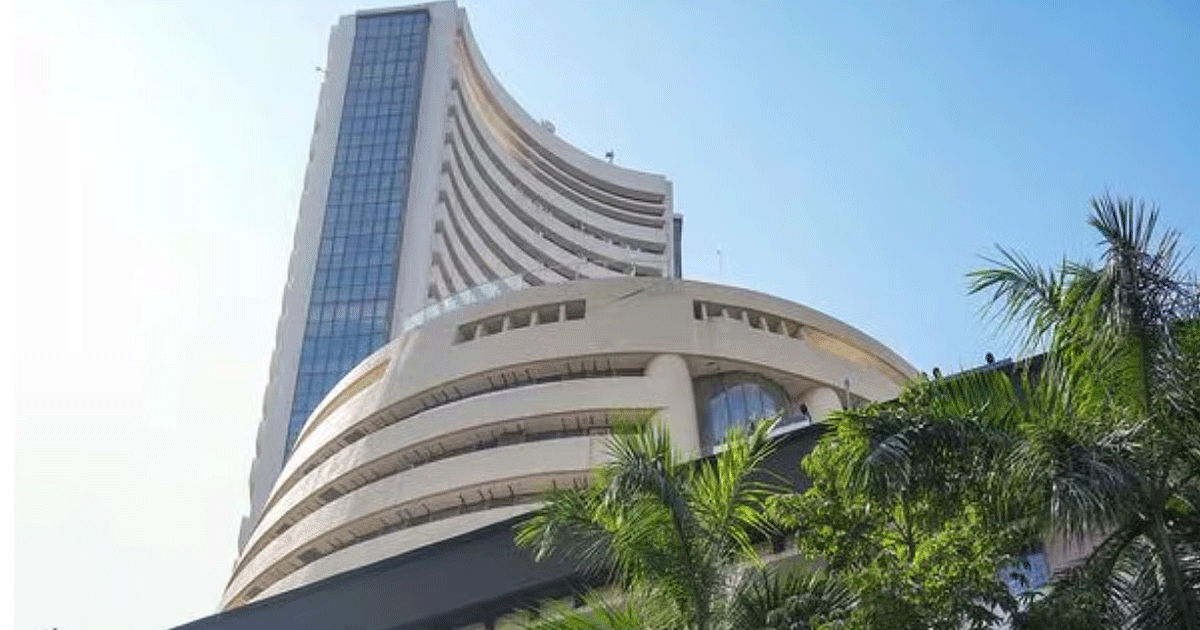
Mumbai: The Indian stock market ended Monday on a strong note, with the BSE Sensex rising 418.81 points (0.52%) to close at 81,018.72, crossing the key 81,000 mark. During the day, it touched a high of 81,093.19. The NSE Nifty also surged by 157.40 points (0.64%) to end at 24,722.75, after hitting an intraday high of 24,734.65.
Top gainers and losers
Among major gainers on the Sensex were Tata Steel, BEL, Adani Ports, TCS, Tech Mahindra, Bharti Airtel, HCL Tech, Trent, M&M, Reliance Industries, UltraTech Cement and L&T.
On the flip side, Power Grid, HDFC Bank, ICICI Bank, and Hindustan Unilever ended the session with losses.
Why the market rallied
The market’s rally was mainly driven by strong performances in the metal and auto sectors. According to experts, a weakening US dollar, strong auto sales, and positive Q1 results from key companies helped boost investor confidence.
Vinod Nair, Head of Research at Geojit Financial Services, said,
“Consumption-driven companies are showing recovery in volume demand. Also, weak US job data may lead to interest rate cuts by the Federal Reserve.”
Global cues positive
Asian markets mostly ended in the green with Hong Kong, South Korea, and China posting gains. However, Japan’s Nikkei closed in red.
European markets were trading positively, while US markets had ended lower on Friday.
Oil prices also slipped, with Brent crude falling 1.15% to USD 68.87 per barrel.
Meanwhile, Foreign Institutional Investors (FIIs) sold shares worth Rs 3,366.40 crore on Friday, as per exchange data.





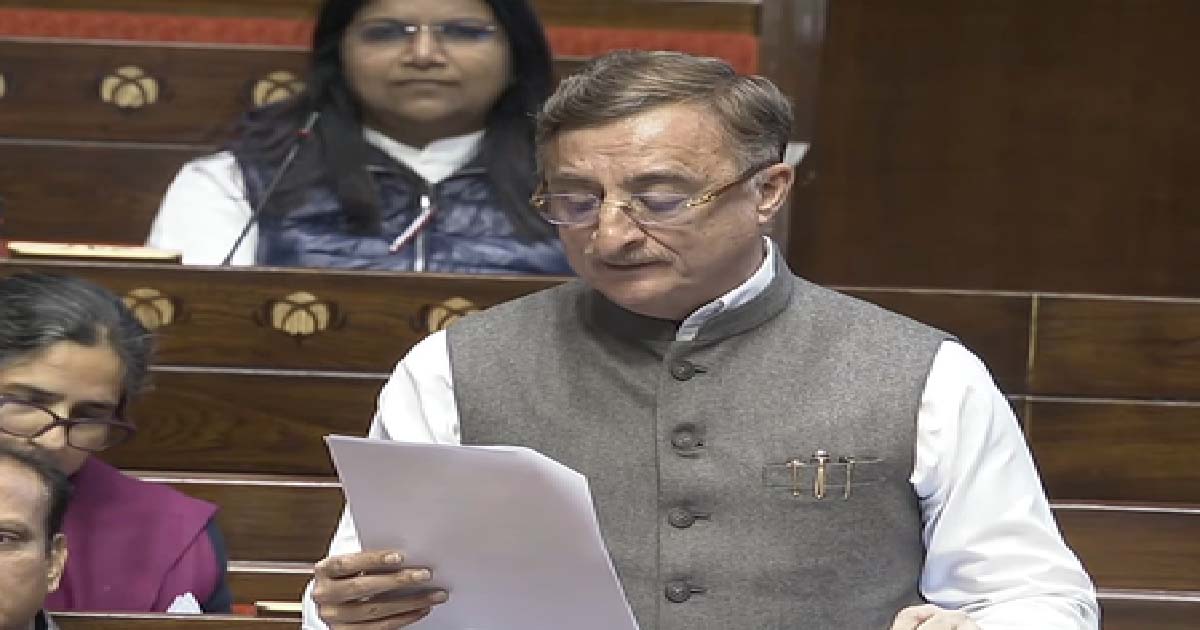
New Delhi, Dec 4: During Zero Hour in the Rajya Sabha on Thursday, Congress MP from Madhya Pradesh Vivek Tankha voiced deep concern over what he described as the “freefall of the Indian rupee” and the widening economic distress affecting ordinary citizens across the country.
Calling the issue “extremely topical and urgent”, Tankha said the currency’s sharp decline was inflicting widespread financial strain on households, businesses and key sectors of the economy.
Tankha noted that the rupee had crashed past Rs 90 per US dollar — touching between 90.14 and 90.19 — marking the weakest level in India’s history. Over the past five years, he said, the rupee has lost between 20 per cent and 27 per cent of its value, effectively reducing the purchasing power of people’s income by nearly one fourth. In global terms, the rupee has fallen 5 per cent this year alone, its steepest drop since 2022, making it one of Asia’s worst-performing currencies in 2025.
He further highlighted that India recently recorded a monthly trade deficit exceeding USD 40 billion, underscoring how sharply imports outweigh exports. At the same time, foreign investors have withdrawn more than USD 17 billion from Indian markets this year — the largest outflow in several years — drying up capital and weakening investor sentiment.
“FDI flows are stagnant, external borrowings have slowed, and the world is becoming increasingly wary of India’s external stability,” Tankha warned.
Emphasising the direct impact on citizens, he said that every bout of rupee depreciation makes imports costlier, and India relies heavily on imported fuel, cooking gas, electronic machinery and medicines. A 5 per cent fall in the rupee, he explained, pushes inflation up by 30-35 basis points.
“Every household ends up paying more. Food prices rise, transport costs increase, and a chain reaction follows that hits the poor the hardest,” he said.
The middle class, he added, is also feeling the squeeze as the prices of smartphones, laptops, medical equipment, school supplies, clothing and household appliances rise due to India’s dependence on imported components.
“For the common person, a falling rupee feels like a salary cut without the employer informing you. Your money buys less every day,” he remarked.
Tankha also drew attention to the pressure on Micro, Small and Medium Enterprises (MSMEs), many of which rely on imported raw materials. These businesses are facing a 20-30 per cent rise in input costs, shrinking already thin margins.
Machinery imports have become more expensive, slowing expansion and putting jobs at risk. Exporters, he said, are not gaining from the weaker rupee because major export sectors — such as textiles, chemicals and engineering goods — depend heavily on imported intermediaries.
“Small manufacturers are caught in a double blow: higher costs and weaker demand,” he said.
Companies with foreign currency loans are also struggling, with repayment costs rising by 15-20 per cent due to the rupee’s depreciation, weakening corporate balance sheets and threatening financial stability.
A falling rupee, Tankha added, discourages overseas investors, creating a “vicious cycle” where declining confidence further accelerates currency pressure. “As the rupee falls, investors pull out, and markets shift,” he cautioned.
Tankha urged the government to recognise the seriousness of the situation and take urgent corrective measures to stabilise the currency and safeguard vulnerable sectors of the economy.
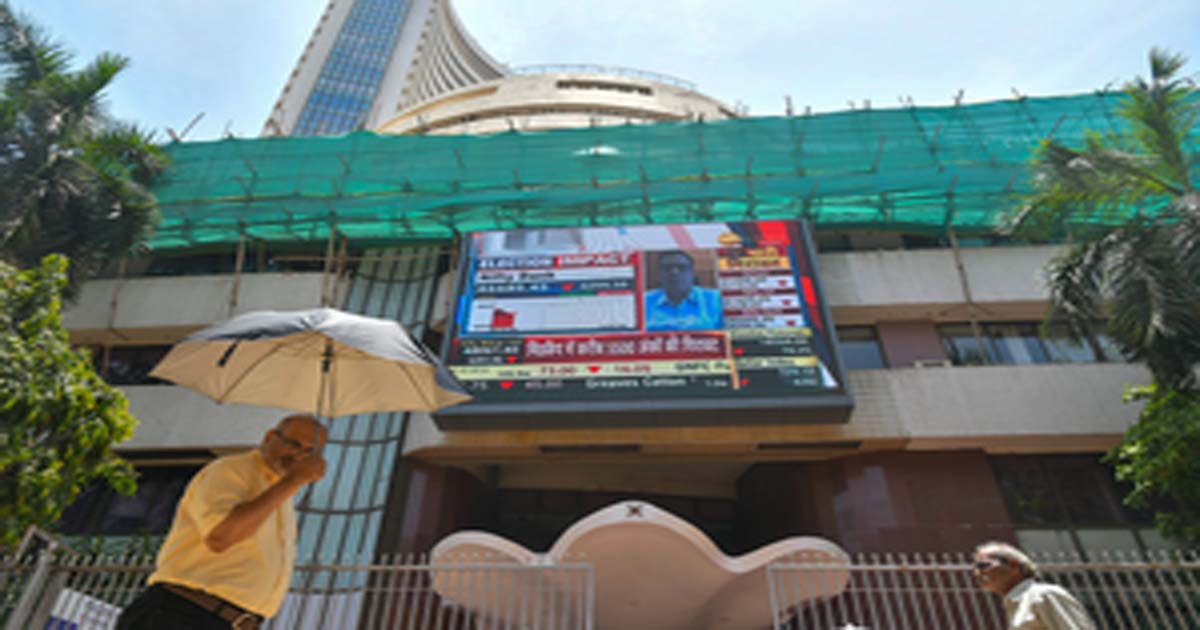
Mumbai, Dec 4: Indian stock markets opened weak on Thursday as pressure from a falling rupee and continued foreign investor selling kept sentiment muted on Dalal Street.
The opening also coincided with the weekly F&O expiry for the Sensex, adding to the cautious mood among traders.
The rupee hit a fresh record low of 90.56 against the US dollar in early trade, worsening concerns about capital outflows.
The sustained depreciation has been fuelled by steady foreign investor selling, firm demand for the dollar, and lingering uncertainty surrounding India’s trade negotiations with the US.
Against this backdrop, the benchmark Sensex began the day at 84,958, down 148 points or 0.17 per cent. The Nifty opened at 25,953, slipping 33 points or 0.13 per cent.
Most heavyweight stocks on the Sensex traded lower in the morning session. HUL, Titan, Eternal, ICICI Bank, Power Grid, Trent, Ultratech Cement, Bajaj Finserv, Tata Motors PV, NTPC, Bajaj Finance, and HDFC Bank were among the major laggards.
Only a handful of large-cap counters managed to stay in the green. IT majors TCS, HCL Tech, Infosys, and Tech Mahindra led the gainers’ list, supported by a stronger dollar. Asian Paints and Bharti Airtel also opened with mild gains.
In the broader market, sentiment was mixed. The Nifty MidCap index edged up 0.17 per cent, showing some resilience, while the Nifty SmallCap index slipped 0.07 per cent.
Market participants said the recent pressure on equities is closely linked to the rupee’s sharp fall. After breaching the 90-per-dollar mark on Wednesday, the currency’s slide has become a key worry for investors, raising concerns over imported inflation and higher costs for companies dependent on overseas supplies.
With global cues still uncertain and the domestic currency under strain, traders expect markets to remain volatile through the day, according to experts.

New Delhi, Dec 3: Reflecting India’s growing role in global AI discussions, the country will host the India-AI Impact Summit 2026 here from February 16–20, the government said on Wednesday.
For the first time, the global AI summit series will take place in the Global South and the shift signals a broader move toward a more inclusive global AI dialogue, said Union Minister of State for Electronics and IT, Jitin Prasada, in Lok Sabha.
“In line with Prime Minister Narendra Modi’s vision, the government is democratising the development and usage of technology. The focus is using Artificial Intelligence (AI) for solving real-world problems and ultimately improving lives across various sectors,” said the minister.
In this regard, the government has taken an inclusive and innovation-friendly approach to AI governance. India’s AI strategy has been formed after studying legal frameworks around the world and extensive consultation with stakeholders. A key pillar of India’s AI strategy is its balanced and pragmatic techno-legal approach to regulation.
The summit reflects India’s growing role in global AI discussions. It follows the UK AI Safety Summit, AI Seoul Summit, Paris AI Action Summit (which India co-chaired), and the Global AI Summit on Africa.
This demonstrates that the Summit is situated within a broader global discourse and seeks to contribute to harmonised international cooperation on responsible AI development, said the minister.
The thematic priorities of the Summit, referred to as the seven ‘Chakras’, underline its key objectives. These include Human Capital, Inclusion, Safe and Trusted AI, Resilience, Innovation and Efficiency, Democratizing AI Resources, and AI for Economic Development and Social Good.
These thematic areas encompass issues such as AI safety, data governance, transparency, human-centred development and accountability frameworks. These discussions are aligned to drive the strategic direction of the Summit’s events and deliberations.
The Summit is intended to generate actionable recommendations that contribute to long-term AI governance objectives rather than framing immediate binding regulations.

Mumbai Crime: Father–Son Real Estate Duo Booked For ₹31.26-Crore Investment Fraud In Jogeshwari Redevelopment Project

Lionel Messi’s G.O.A.T India Tour: Football Legend To Arrive On December 14 In Mumbai; CM Devendra Fadnavis Shares Excitement On X

Cong flags sharp rupee decline in Rajya Sabha, warns of widespread economic strain

Privilege to have that kind of confidence from management: Gaikwad on batting at No. 4

Maharashtra Politics: Mahayuti Government Clarifies Submission Of Flood Relief Proposal Amid Opposition Claims

Kalyan College Namaz Controversy: SIO Demands Action Against Perpetrators

FIR filed against unidentified person in Bilaspur train collision

Good News Navi Mumbaikars! Ulwe Coastal Road 60% Complete, Major Link Between Atal Setu & Upcoming NMI Airport Progresses Smoothly

A powerful explosion near Delhi’s Red Fort… High alert across Delhi after the blast; 8 people killed; forensic team arrives at the scene.

Dharmendra’s Fan, An Auto-Rickshaw Driver, Breaks Down Outside Actor’s Mumbai Home After His Discharge, Says ‘Admired Him Since Childhood
-

 Crime3 years ago
Class 10 student jumps to death in Jaipur
-

 Maharashtra1 year ago
Mumbai Local Train Update: Central Railway’s New Timetable Comes Into Effect; Check Full List Of Revised Timings & Stations
-
 Maharashtra1 year ago
Mumbai To Go Toll-Free Tonight! Maharashtra Govt Announces Complete Toll Waiver For Light Motor Vehicles At All 5 Entry Points Of City
-

 Maharashtra1 year ago
False photo of Imtiaz Jaleel’s rally, exposing the fooling conspiracy
-
 National News1 year ago
Ministry of Railways rolls out Special Drive 4.0 with focus on digitisation, cleanliness, inclusiveness and grievance redressal
-
 Maharashtra1 year ago
Maharashtra Elections 2024: Mumbai Metro & BEST Services Extended Till Midnight On Voting Day
-

 National News1 year ago
J&K: 4 Jawans Killed, 28 Injured After Bus Carrying BSF Personnel For Poll Duty Falls Into Gorge In Budgam; Terrifying Visuals Surface
-

 Crime1 year ago
Baba Siddique Murder: Mumbai Police Unable To Get Lawrence Bishnoi Custody Due To Home Ministry Order, Says Report