
Business
Maruti Suzuki India announces up to 4 pc price hike from April

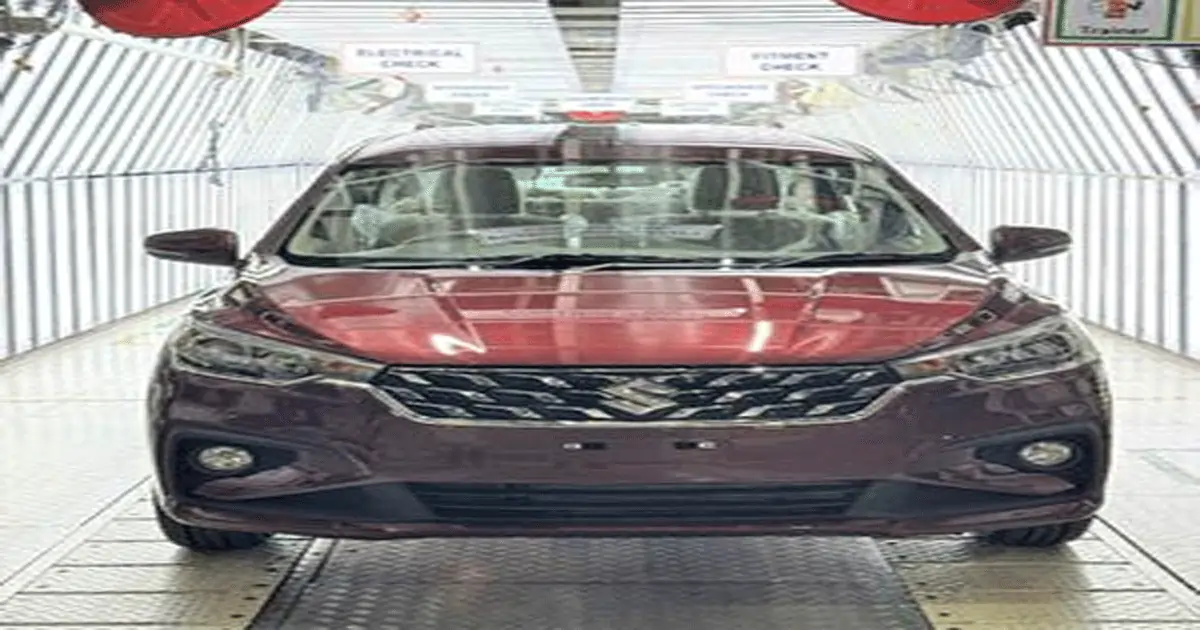
New Delhi, March 17: Leading automaker Maruti Suzuki India Ltd on Monday announced its third price hike this year — up to 4 per cent which is effective from April — to offset rising input costs amid moderating sales.
The price increase on the vehicles from next month will vary depending on the model, according to an exchange filing by the company.
“In light of rising input costs and operational expenses, the company has planned to increase the prices of its cars from April, 2025. The price increase is expected to be up to 4 per cent and will vary depending on the model,” said Maruti Suzuki India.
“While the company continuously strives to optimise costs and minimise the impact on its customers, some portion of the increased cost may need to be passed on to the market,” it added in the filing.
The company had previously raised car prices on January 1 and February 1.
The leading car manufacturer clocked a 16 per cent increase in net profit to Rs 3,727 crore for the October-December quarter of the current financial year, compared to the corresponding figure of Rs 3,206.8 crore in the same quarter last year.
On a standalone basis, the company’s net profit rose 13 per cent year-on-year to Rs 3,525 crore from Rs 3,130 crore in the same quarter last year.
Meanwhile, the Suzuki Motor Corporation of Japan, the parent company of Maruti Suzuki India, last month announced a new mid-term plan with a “rethink” in its strategy as “the business environment has changed due to declining market share in India” and the growing electrical vehicles segment.
In its new mid-term plan for 2025-30, the company has identified India as its “most important market”. Maruti Suzuki aims to create a manufacturing capacity of producing 4 million cars annually to reclaim a 50 per cent market share in India and use the country as a global export hub as well.
Maruti Suzuki is currently exporting three lakh vehicles from India annually.
By the end of this decade, it is targeting the export of 7.5-8 lakh units per year.

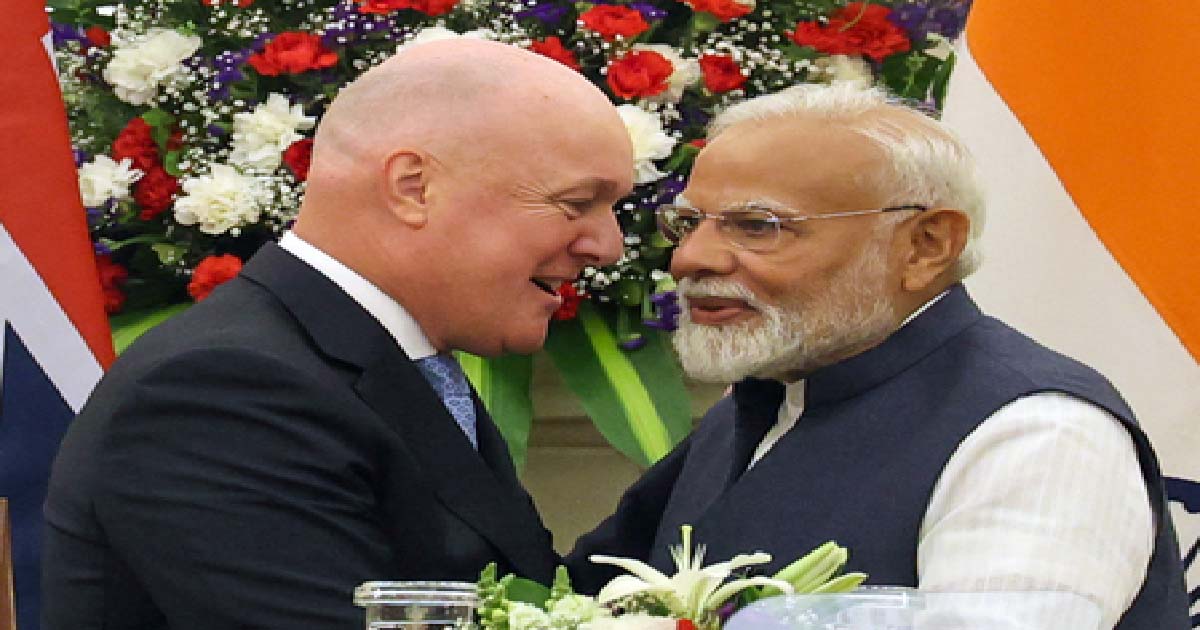
New Delhi, Dec 22: Prime Minister Narendra Modi held a telephone conversation with New Zealand’s Prime Minister, Christopher Luxon, on Monday as the two leaders jointly announced the successful conclusion of the historic, ambitious and mutually beneficial India-New Zealand Free Trade Agreement (FTA).
During the conversation, both leaders expressed confidence in doubling bilateral trade over the next five years as well as an investment of $20 billion in India from New Zealand over the next 15 years.
The negotiations began in March this year and the two leaders concluded the FTA in a record time of nine months, reflecting the shared ambition and political will to further deepen ties between the two countries, according to a statement from Prime Minister’s Office (PMO).
“The FTA would significantly deepen bilateral economic engagement, enhance market access, promote investment flows, strengthen strategic cooperation between the two countries, and also open up new opportunities for innovators, entrepreneurs, farmers, MSMEs, students and youth of both countries across various sectors,” said the statement.
The leaders also welcomed the progress achieved in other areas of bilateral cooperation such as sports, education, and people-to-people ties, and reaffirmed their commitment towards further strengthening of the India-New Zealand partnership.
This historic FTA eliminates and reduces tariffs on 95 per cent of New Zealand’s exports – among the highest of any Indian FTA – with almost 57 per cent being duty-free from day one, increasing to 82 per cent when fully implemented, with the remaining 13 per cent subject to sharp tariff cuts.
It puts New Zealand exporters on an equal or better footing to our competitors across a range of sectors and opens the door to India’s rapidly expanding middle class, according to an official statement from New Zealand.
“The Indian economy is forecast to grow to NZ$12 trillion by 2030. The India-NZ Free Trade Agreement unleashes huge potential for our world-class exporters to the world’s largest country and will significantly accelerate progress towards New Zealand’s ambitious goal of doubling the value of exports over 10 years,” it added.
Business
Mumbai-Bound Air India Flight Returns To Delhi Airport Minutes After Take Off Due To Technical Glitch


New Delhi: A Mumbai-bound Air India flight AI887 returned to the Delhi Airport minutes after take-off due to a technical issue. The Delhi–Mumbai flight made an emergency landing according to standard operating procedure.
As perv an Air India spokesperson, the aircraft (Boeing 777) landed safely at Delhi, and the passengers and crew disembarked.
The Boeing 777 suffered an engine issue soon after take-off, reported The Times of India. The aircraft reportedly took off at 6.10 am and returned to the airport at 6.52 am. The aircraft is currently undergoing necessary checks.
As per the report, the airline arranged another B777 (VT-ALP) for passengers and even provided refreshments for them.
On Sunday, over 100 flights were cancelled from the Delhi Airport due to dense fog conditions in the national capital. Meanwhile, more than 400 flights were also delayed at the airport.
Over the past few days, most parts of the nothern and northwestern regions of the country are witnessing dense fog condition.
“Dense to very dense fog conditions during night/morning hours very likely in some parts of Uttarakhand, Uttar Pradesh, Haryana till morning hours of 21st; in isolated pockets of Punjab, Haryana during 25th-27,” the India Meteorological Department (IMD) had said in its press statement on Sunday.
On Friday also, an Air India flight travelling from Mumbai to Varanasi was forced to make an emergency diversion to Bhubaneswar after deteriorating weather conditions made landing at the destination airport unsafe. The aircraft landed at Biju Patnaik International Airport (BPIA) as a precautionary measure, airline officials confirmed.
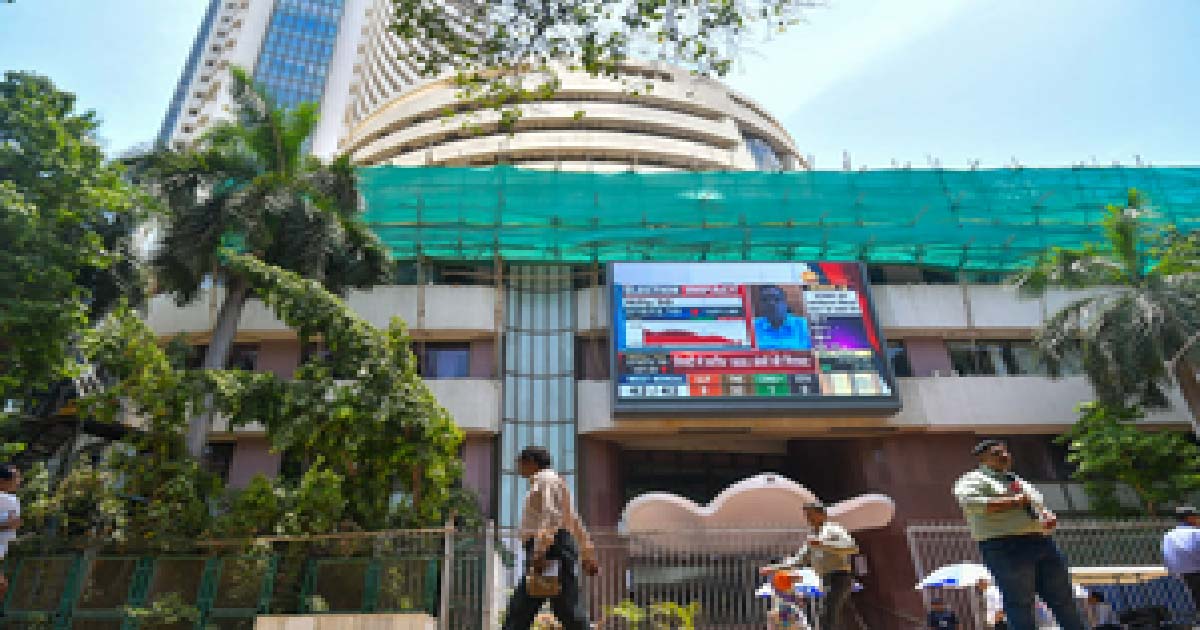
Mumbai, Dec 22: Indian benchmark indices opened in green zone on Monday, breaking the last week’s trend of edging lower, amid strong buying in the US and China markets.
As of 9.30 am, the Sensex advanced 507 points, or 0.60 per cent, at 84,436 and the Nifty added 165 points, or 0.64 per cent to 26,132.
The broad cap indices performed in line with the benchmarks, with the Nifty Midcap 100 up 0.58 per cent and the Nifty Smallcap 100 adding 0.51 per cent.
Hindalco, Tech Mahindra and TCS were among the major gainers in the Nifty Pack, while losers included Asian Paints, Bajaj Finance, Max Healthcare and Cipla.
All the sectoral indices on NSE were trading in the green with metal, IT and media being the major gainers — up around 1.48, 1.23 and 0.77 per cent, respectively.
Analysts noted that market is likely heading for a year-end rally. The rupee’s sharp reversal and FIIs’ cash market purchases can accelerate this rally, as they lead to short covering, pushing benchmark indices higher. The Goldilocks domestic economic set up and potential earnings growth uptrend can support a market upturn, they added.
The US markets ended mostly in the green zone on the last trading day, as Nasdaq advanced 1.31 per cent, the S&P 500 edged up 0.88 per cent, and the Dow moved up 0.38 per cent.
As investors parsed China’s central bank keeping loan prime rate steady, Asia-Pacific markets rose on Monday.
The People’s Bank of China maintained its 1-year and 5-year loan prime rates steady, which affects most new and outstanding loans and mortgages.
In Asian markets, China’s Shanghai index advanced 0.64 per cent, and Shenzhen dropped 1.36 per cent, Japan’s Nikkei edged up 1.75 per cent, while Hong Kong’s Hang Seng Index added 0.29 per cent. South Korea’s Kospi added 1.72 per cent.
On Friday, foreign institutional investors (FIIs) sold equities worth Rs 2,387 crore, while domestic institutional investors (DIIs) were net buyers of equities worth Rs 5,200 crore.

Mumbai: Rickshaw driver beaten up in Vikhroli on suspicion of child theft, burqa-clad driver did this to collect fare, police claim

Municipal Corporation in Mumbai is committed to conducting administration and election process in a fearless, free and transparent environment: Bhushan Gagrani

Mira Road: Bundles Of Blank PVC Aadhar Card Found On Roadside Near Kashimira Ahead Of Municipal Corporations Polls 2026

CM Yogi’s ‘2 namoone’ jibe at Oppn over codeine row, Akhilesh hits back with a twist (Lead)

Drishyam 3 Release Date: Will It Be Ajay Devgn Starrer Vs Shah Rukh Khan’s King At The Box Office?

Kalyan College Namaz Controversy: SIO Demands Action Against Perpetrators

Sensex, Nifty open lower amid weak global cues

Veteran Bollywood Actor Dharmendra Passes Away at 89

Mukesh Ambani, Shiv Sena UBT Chief Uddhav Thackeray & Son Aaditya Share Warm Greetings At Mumbai’s Swadesh Event

Kartik Aaryan, Ananya Panday promote ‘Tu Meri Main Tera, Main Tera Tu Meri’ on Amitabh Bachchan’s KBC
-

 Crime3 years ago
Class 10 student jumps to death in Jaipur
-

 Maharashtra1 year ago
Mumbai Local Train Update: Central Railway’s New Timetable Comes Into Effect; Check Full List Of Revised Timings & Stations
-
 Maharashtra1 year ago
Mumbai To Go Toll-Free Tonight! Maharashtra Govt Announces Complete Toll Waiver For Light Motor Vehicles At All 5 Entry Points Of City
-

 Maharashtra1 year ago
False photo of Imtiaz Jaleel’s rally, exposing the fooling conspiracy
-
 National News1 year ago
Ministry of Railways rolls out Special Drive 4.0 with focus on digitisation, cleanliness, inclusiveness and grievance redressal
-
 Maharashtra1 year ago
Maharashtra Elections 2024: Mumbai Metro & BEST Services Extended Till Midnight On Voting Day
-

 National News1 year ago
J&K: 4 Jawans Killed, 28 Injured After Bus Carrying BSF Personnel For Poll Duty Falls Into Gorge In Budgam; Terrifying Visuals Surface
-

 Crime1 year ago
Baba Siddique Murder: Mumbai Police Unable To Get Lawrence Bishnoi Custody Due To Home Ministry Order, Says Report