
National News
Arif Mohammad Khan sworn in as Bihar Governor

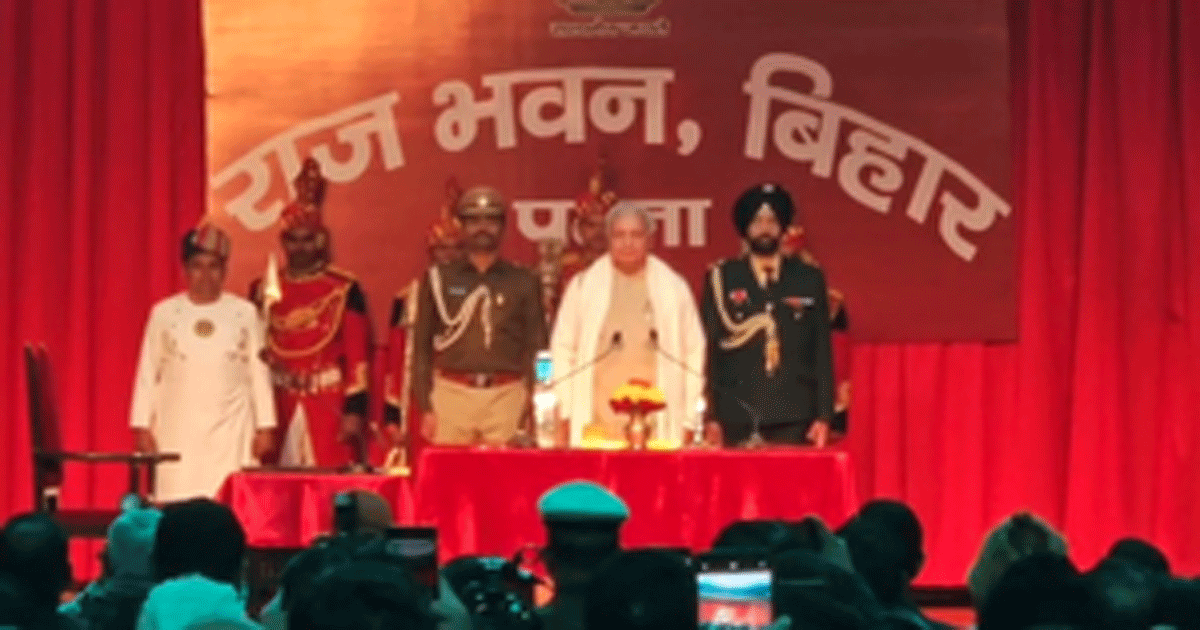
Patna, Jan 2: Arif Mohammad Khan took the oath as Bihar’s 42nd Governor on Thursday at Rajendra Mandapam, Raj Bhavan.
Patna High Court Chief Justice Krishnan Vinod Chandran administered the oath of office and secrecy to Khan.
The ceremony was attended by Bihar Chief Minister Nitish Kumar, Deputy Chief Minister Samrat Chaudhary and other ministers.
Khan, who previously served as Kerala Governor, will succeed Rajendra Vishwanath Arlekar.
Before taking the oath, Khan paid tribute to former President Rajendra Prasad at his memorial in Patna.
After reaching Patna on Monday, Khan told the media that he would “try to discharge his duties as per the glorious tradition of the state”.
Khan is the second person from the minority community to hold the Governor’s post in the state. Earlier, A. R. Kidwai served as Governor from August 14, 1993, to April 26, 1998.
Khan has a long and diverse political career having been associated with the Janata Party, Lok Dal, Bahujan Samaj Party, Congress, and the BJP.
He previously served as a Union Minister alongside Chief Minister Nitish and gained prominence for his resignation from the Congress over the Shah Bano case.
On December 24, President Droupadi Murmu appointed governors for five states.
Vijay Kumar Singh was appointed Mizoram Governor, Hari Babu Kambhampati as Odisha Governor, Ajay Kumar Bhalla as Manipur Governor and Rajendra Viswanath Arlekar as Kerala Governor.
The relationship between Khan and Chief Minister Vijayan was marked by frequent public disagreements. Tensions peaked over Khan’s resistance to the Kerala government’s efforts to exert influence over state universities. The dispute culminated in Khan refusing to sign several key ordinances and bills, compelling the state government to seek the Supreme Court’s intervention.

International News
‘Govt follows protocol’: BJP respond after Rahul Gandhi remarks on Oppn-Putin meeting

New Delhi, Dec 4: After Congress MP Rahul Gandhi alleged that the Centre has been advising foreign delegations against meeting or interacting with the Leader of the Opposition (LoP) – a practice he said was followed during previous UPA and NDA regimes, ruling party leaders on Thursday rejected the claim, asserting that the “government follows due protocol” in all matters.
The startling charge by Rahul Gandhi, while speaking to reporters outside Parliament, comes hours ahead of Russian President Vladimir Putin’s two-day visit to India. His remarks are set to raise eyebrows in the political corridors and also set the stage for heated sparring between the BJP and Congress.
Rahul Gandhi said, “Meetings with the LOP take place with delegations coming from outside. It has been a long-held tradition and has always been done this way,” he said, while citing instances during Manmohan Singh and Atal Bihari Vajpayee governments.”
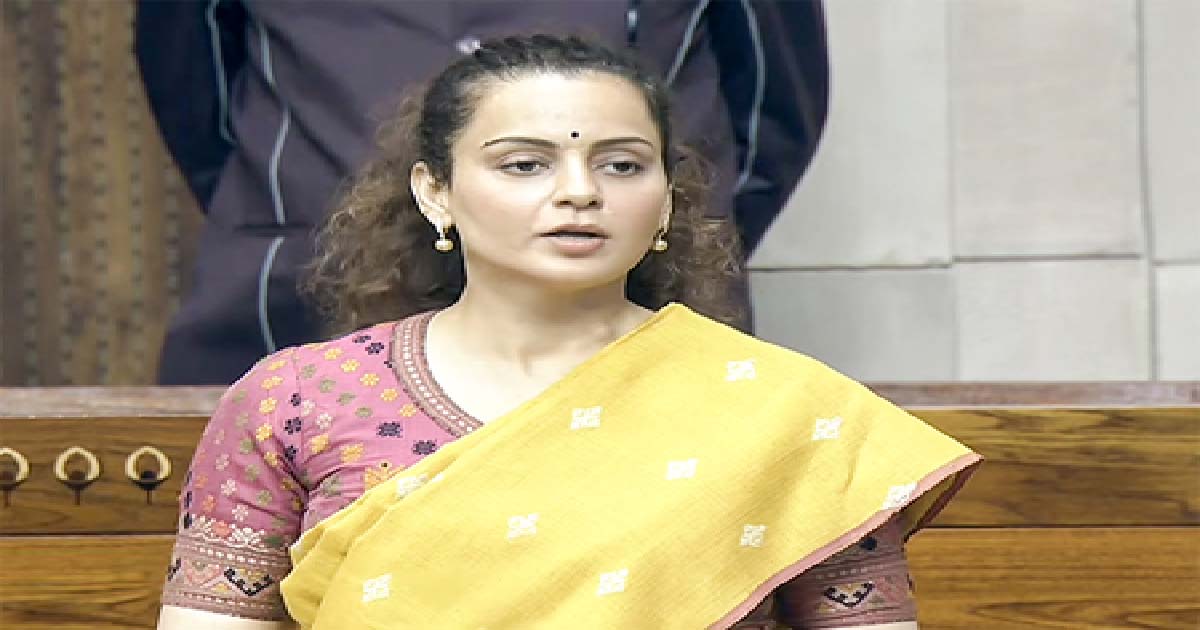
Speaking to Media, BJP MP Kangana Ranaut said, “These decisions are made by the government. Atal ji was a national asset, and the entire country was proud of him. He was a great patriot. I don’t know why Rahul Gandhi is not being allowed, but in my opinion, his commitment to the nation is questionable. His role in creating unrest and trying to divide the country raises doubts about his intentions. And if Rahul Gandhi is comparing himself to Atal ji, then I would suggest he join the BJP — only then could he become like him.”
BJP MP Bhim Singh said, “Why would the government stop him? He only creates chaos and does not speak where he is supposed to speak.”
Echoing a similar stance, BJP MP Brij Lal added, “The government follows protocol, and work will be carried out accordingly. Rahul Gandhi is only making this political.”
JD(U) leader K. C. Tyagi clarified, “The government does not decide such protocols. Visiting heads of state themselves decide whom they wish to meet.”
Union Minister Ramdas Athawale added, “Foreign leaders visit on the invitation of the ruling party or government. If President Putin wishes, Rahul Gandhi, as LoP, can meet him. The government has no role in that.”
National News
Lionel Messi’s G.O.A.T India Tour: Football Legend To Arrive On December 14 In Mumbai; CM Devendra Fadnavis Shares Excitement On X
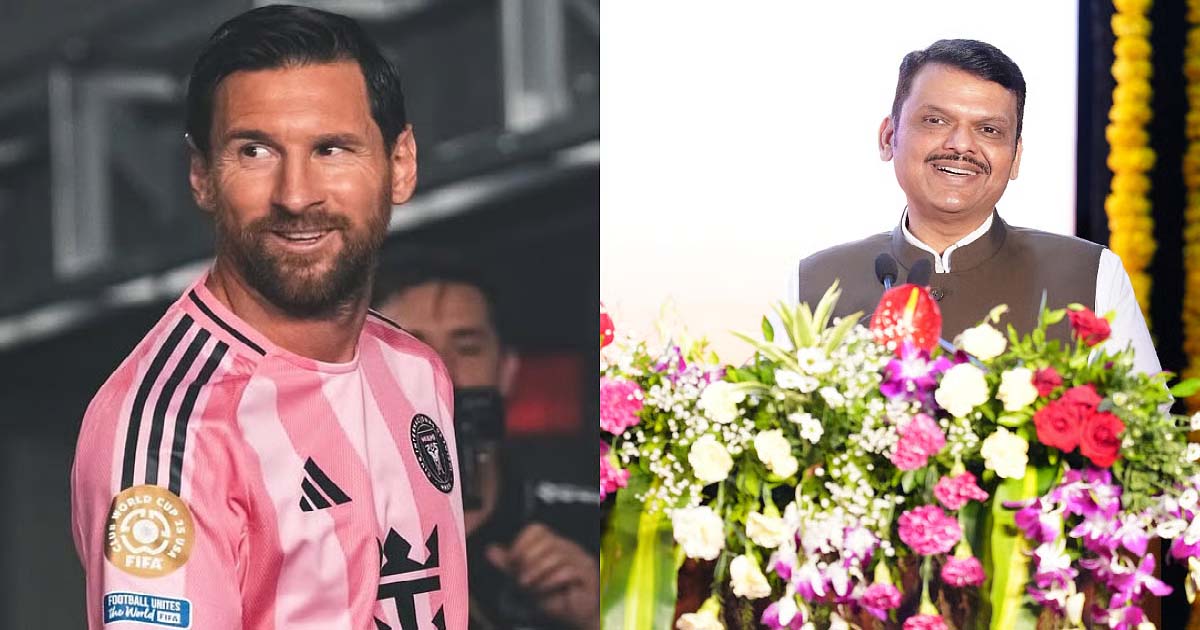
Mumbai: is bracing for an unforgettable sporting spectacle as Lionel Messi, global football icon and seven-time Ballon d’Or winner, prepares to land in the city for the G.O.A.T India Tour 2025. Maharashtra Chief Minister Devendra Fadnavis shared the excitement on X, posting: “Counting down to 14th December! Looking forward to welcoming Lionel Messi to Mumbai… Our young players are eagerly preparing for this inspiring opportunity.”
Messi’s visit marks his first trip to India since 2011, when he captained Argentina in a friendly against Venezuela in Kolkata. This time, the legend arrives not for a match but for a grand-scale fan experience tailored exclusively for Mumbai. The anticipation has set the city buzzing, with fans gearing up for a night that promises to rewrite sporting memories.
The Mumbai chapter of the tour, scheduled for 14 December 2025, will take place at the iconic Wankhede Stadium, known for historic cricketing moments including India’s 2011 World Cup win and Sachin Tendulkar’s farewell. The venue will now welcome another sporting great, with organisers expecting over 30,000 fans to fill the stands.
The event will begin at 5 pm IST and is expected to go late into the night, blending football, music, choreography, and Mumbai’s trademark glamour. The Wankhede will transform into a pulsating arena with lights, performances and immersive audiovisual experiences designed to celebrate Messi’s extraordinary legacy.
Mumbai’s young footballers, academies, and fan clubs are preparing special tributes and gatherings ahead of the event. The G.O.A.T Tour also includes stops in Kolkata, Ahmedabad and New Delhi, but the Mumbai show is tipped to be the most spectacular. Hotels near Marine Drive and South Mumbai are already reporting heightened bookings as fans from across India converge for the once-in-a-lifetime experience.
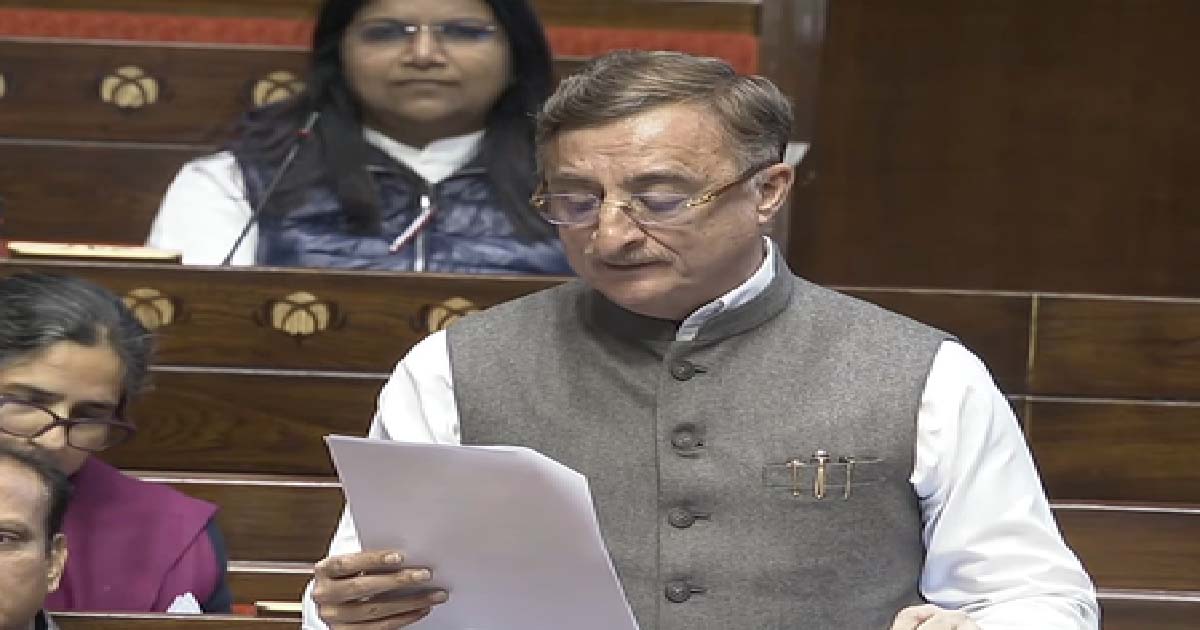
New Delhi, Dec 4: During Zero Hour in the Rajya Sabha on Thursday, Congress MP from Madhya Pradesh Vivek Tankha voiced deep concern over what he described as the “freefall of the Indian rupee” and the widening economic distress affecting ordinary citizens across the country.
Calling the issue “extremely topical and urgent”, Tankha said the currency’s sharp decline was inflicting widespread financial strain on households, businesses and key sectors of the economy.
Tankha noted that the rupee had crashed past Rs 90 per US dollar — touching between 90.14 and 90.19 — marking the weakest level in India’s history. Over the past five years, he said, the rupee has lost between 20 per cent and 27 per cent of its value, effectively reducing the purchasing power of people’s income by nearly one fourth. In global terms, the rupee has fallen 5 per cent this year alone, its steepest drop since 2022, making it one of Asia’s worst-performing currencies in 2025.
He further highlighted that India recently recorded a monthly trade deficit exceeding USD 40 billion, underscoring how sharply imports outweigh exports. At the same time, foreign investors have withdrawn more than USD 17 billion from Indian markets this year — the largest outflow in several years — drying up capital and weakening investor sentiment.
“FDI flows are stagnant, external borrowings have slowed, and the world is becoming increasingly wary of India’s external stability,” Tankha warned.
Emphasising the direct impact on citizens, he said that every bout of rupee depreciation makes imports costlier, and India relies heavily on imported fuel, cooking gas, electronic machinery and medicines. A 5 per cent fall in the rupee, he explained, pushes inflation up by 30-35 basis points.
“Every household ends up paying more. Food prices rise, transport costs increase, and a chain reaction follows that hits the poor the hardest,” he said.
The middle class, he added, is also feeling the squeeze as the prices of smartphones, laptops, medical equipment, school supplies, clothing and household appliances rise due to India’s dependence on imported components.
“For the common person, a falling rupee feels like a salary cut without the employer informing you. Your money buys less every day,” he remarked.
Tankha also drew attention to the pressure on Micro, Small and Medium Enterprises (MSMEs), many of which rely on imported raw materials. These businesses are facing a 20-30 per cent rise in input costs, shrinking already thin margins.
Machinery imports have become more expensive, slowing expansion and putting jobs at risk. Exporters, he said, are not gaining from the weaker rupee because major export sectors — such as textiles, chemicals and engineering goods — depend heavily on imported intermediaries.
“Small manufacturers are caught in a double blow: higher costs and weaker demand,” he said.
Companies with foreign currency loans are also struggling, with repayment costs rising by 15-20 per cent due to the rupee’s depreciation, weakening corporate balance sheets and threatening financial stability.
A falling rupee, Tankha added, discourages overseas investors, creating a “vicious cycle” where declining confidence further accelerates currency pressure. “As the rupee falls, investors pull out, and markets shift,” he cautioned.
Tankha urged the government to recognise the seriousness of the situation and take urgent corrective measures to stabilise the currency and safeguard vulnerable sectors of the economy.

Mumbai: Crime Branch raids travel agency… Fraud in the name of sending abroad illegally, police action, case registered

10 years imprisonment for sexually assaulting a girl at Kasturba police station

‘Govt follows protocol’: BJP respond after Rahul Gandhi remarks on Oppn-Putin meeting

Mumbai Crime: Father–Son Real Estate Duo Booked For ₹31.26-Crore Investment Fraud In Jogeshwari Redevelopment Project

Lionel Messi’s G.O.A.T India Tour: Football Legend To Arrive On December 14 In Mumbai; CM Devendra Fadnavis Shares Excitement On X

Kalyan College Namaz Controversy: SIO Demands Action Against Perpetrators

FIR filed against unidentified person in Bilaspur train collision

Good News Navi Mumbaikars! Ulwe Coastal Road 60% Complete, Major Link Between Atal Setu & Upcoming NMI Airport Progresses Smoothly

A powerful explosion near Delhi’s Red Fort… High alert across Delhi after the blast; 8 people killed; forensic team arrives at the scene.

Dharmendra’s Fan, An Auto-Rickshaw Driver, Breaks Down Outside Actor’s Mumbai Home After His Discharge, Says ‘Admired Him Since Childhood
-

 Crime3 years ago
Class 10 student jumps to death in Jaipur
-
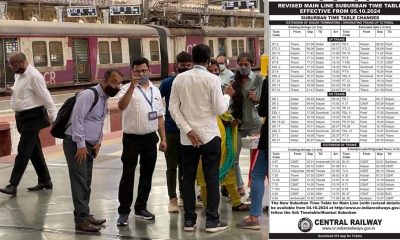
 Maharashtra1 year ago
Mumbai Local Train Update: Central Railway’s New Timetable Comes Into Effect; Check Full List Of Revised Timings & Stations
-
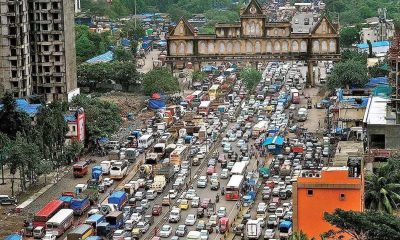
 Maharashtra1 year ago
Mumbai To Go Toll-Free Tonight! Maharashtra Govt Announces Complete Toll Waiver For Light Motor Vehicles At All 5 Entry Points Of City
-
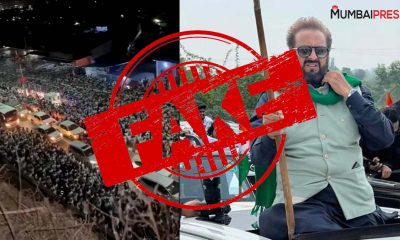
 Maharashtra1 year ago
False photo of Imtiaz Jaleel’s rally, exposing the fooling conspiracy
-
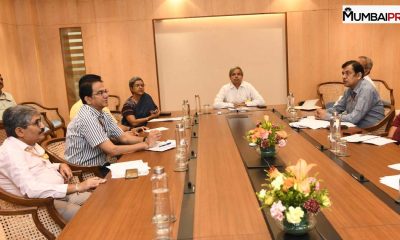
 National News1 year ago
Ministry of Railways rolls out Special Drive 4.0 with focus on digitisation, cleanliness, inclusiveness and grievance redressal
-
 Maharashtra1 year ago
Maharashtra Elections 2024: Mumbai Metro & BEST Services Extended Till Midnight On Voting Day
-

 National News1 year ago
J&K: 4 Jawans Killed, 28 Injured After Bus Carrying BSF Personnel For Poll Duty Falls Into Gorge In Budgam; Terrifying Visuals Surface
-
 Crime1 year ago
Baba Siddique Murder: Mumbai Police Unable To Get Lawrence Bishnoi Custody Due To Home Ministry Order, Says Report