
International News
6.1-magnitude earthquake strikes off Japan’s Iwate


Tokyo, June 28: An earthquake with a preliminary magnitude of 6.1 struck off Iwate Prefecture in northeastern Japan early Sunday, the country’s weather agency said. No tsunami warning was issued.
The temblor occurred at 5:21 a.m. local time off Iwate’s eastern coast at a depth of about 40 km, measuring lower 5 on Japan’s seismic intensity scale of 7 in parts of Aomori and Iwate prefectures, reports Xinhua, quoting the Japan Meteorological Agency.
No abnormalities were reported at the Higashidori nuclear power plant in Aomori or at the Onagawa nuclear power complex in Miyagi Prefecture, according to their operator.
The quake’s epicentre was located at a latitude of 40.2 degrees north and a longitude of 142.4 degrees east.
A 7.2-magnitude earthquake jolted the same region on Thursday, injuring at least 10 people.
Friday saw two quakes — a 5.6-magnitude and 5.8-magnitude — strike near Tokyo, with shaking clearly felt in the capital. At least 10 people were injured.
At 11:49 a.m. on Friday, a 4.1-magnitude earthquake hit southern Ibaraki Prefecture, with tremors also clearly felt in the capital.
Meanwhile, on Thursday, at least four people were injured after a 7.2-magnitude earthquake struck northeastern Japan.
The temblor, revised up from a preliminary magnitude of 6.9, occurred at around 7:30 a.m. local time off the eastern coast of Iwate Prefecture at a depth of about 40 km. It measured upper 6, the second-highest level on Japan’s seismic scale of 7, in Hashikami Town and lower 6 in Hachinohe City, both in Aomori Prefecture, the Japan Meteorological Agency (JMA) said.
An intensity of lower 6 means it is difficult to remain standing, and unsecured objects like furniture may topple over, and windows may be damaged, reports Kyodo News, quoting the agency.

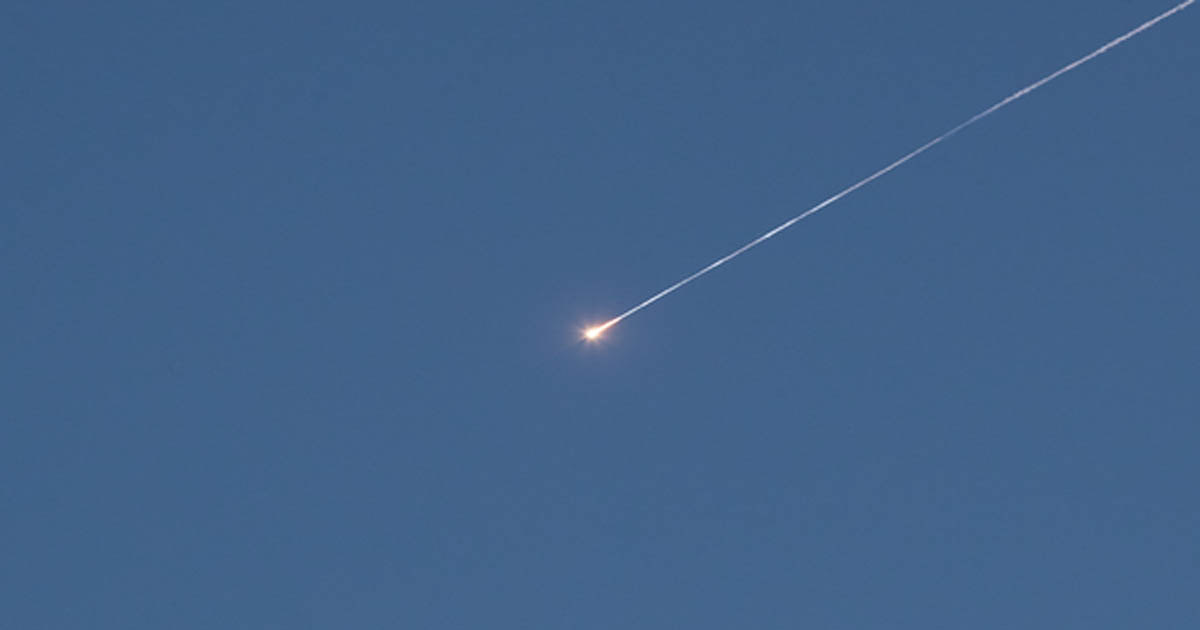
Tehran, Aug 31: Iran’s Islamic Revolutionary Guard Corps (IRGC) said Monday it had launched a combined missile and drone strike on US air bases in Jordan in retaliation for the US-Israeli aerial attacks on Iran’s Larak Island Sunday night.
The Iranian military targeted “technical and maintenance infrastructure,” as well as areas where “enemy fighter jets” were stationed at the King Hussein and Al-Azraq US bases in Jordan, inflicting heavy damage, Iran’s Fars news agency reported, citing an IRGC statement.
“Aggression and crimes will not solve the enemy’s desperation in attempting to weaken the Islamic Republic’s control over the Strait of Hormuz, and every attack will be met with even more devastating responses,” the statement said.
The reported attack followed a US strike on two IRGC rocket launchers on Larak Island, an Iranian island positioned near the strategic Strait of Hormuz.
US forces on Sunday struck two Iranian launchers on Larak Island, US Central Command spokesperson Tim Hawkins said, marking the first known US strike against Iran since late July.
“Islamic Revolutionary Guard Corps forces were observed preparing to launch rockets with sea mines into Strait of Hormuz,” Hawkins said in a statement, adding that the US military was “monitoring the area closely and remains prepared to protect the free flow of commerce” through the strategic waterway.
Larak Island is a small Iranian island located off the coast of Bandar Abbas, east of Qeshm Island and south of Hormuz Island.
IRGC said multiple military personnel and civilians were killed or wounded Sunday night in a “US-Israeli” attack on Iran’s southern Larak Island in Hormozgan province, reports Xinhua news agency.
In a statement published by its official news outlet, Sepah News, the IRGC vowed that the attack would be met with “punishment for the aggressor.”
Citing unofficial reports, Iran’s semi-official Tasnim news agency said that at least two people were killed and two others injured in what it described as a US “drone attack” on the island.
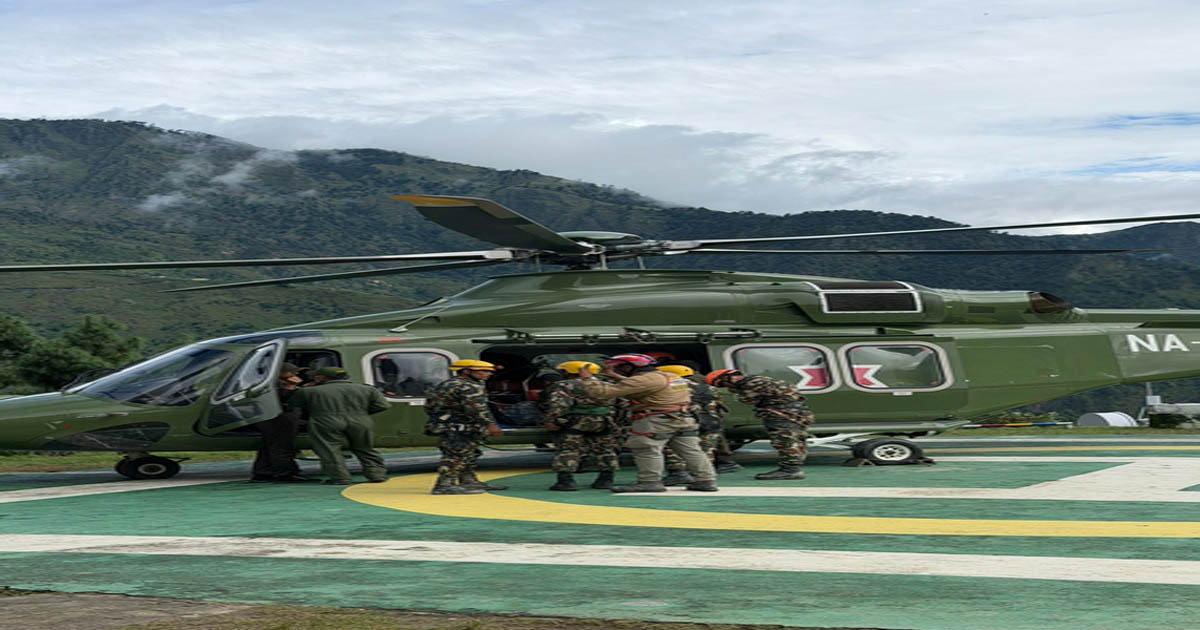
Kathmandu, Aug 31: An Indian tunnel rescue team is continuing its search and rescue operations to save the lives of people trapped inside tunnels of different hydropower projects following the devastating floods in the Bhote Koshi River last week, the Indian Embassy said on Monday.
“The tunnel rescue team from India worked with the Nepali Army’s team to conduct search and rescue operations at hydropower tunnel sites in the Chilime and Langtang areas today,” the embassy said, adding that the team would continue search and rescue operations in close coordination with the Nepali Army.
According to the Independent Power Producers’ Association, Nepal (IPPAN), a representative association of private-sector power developers, a total of 897 people employed at 11 hydropower projects in the flood-affected districts of Rasuwa and Nuwakot have been out of contact.
According to Nepal’s National Disaster Risk Reduction and Management Authority (NDRRMA), seven Indian and 15 Chinese nationals who were trapped in hydropower projects were rescued on Sunday.
At the request of the Nepali government, Indian and Chinese tunnel technicians arrived in Nepal and have been engaged in rescue efforts to evacuate people trapped inside hydropower tunnels.
On Sunday, the Indian team was involved in rescue efforts at different hydropower projects, according to statements from Nepali government authorities and IPPAN.
The Secretariat of the Minister for Energy, Water Resources and Irrigation said that the Indian team that arrived to assist with the rescue operation conducted an initial aerial reconnaissance of the Chilime and Langtang areas by helicopter and plans to undertake further rescue operations as required.
Prime Minister Balendra Shah said in a Facebook post late Sunday evening that an Indian team conducted reconnaissance at the Chilime Hydropower Project (22MW) in Rasuwa in coordination with the Nepal Army and carried out rescue efforts after taking pumps and excavators to the site.
However, the rescue operation at the Chilime project on Sunday was halted after another flood swept away structures that had survived the previous flood in the dam area, according to IPPAN.
“At the Langtang Khola Hydropower Project in Rasuwa, the Nepal Army conducted search-and-rescue patrols,” the Prime Minister said. “An Indian team has also conducted reconnaissance in coordination with the Nepal Army and has begun additional work after bringing pumps and excavators to the site.”
International News
In special gesture, Uzbekistan President Mirziyoyev receives PM Modi at Tashkent airport

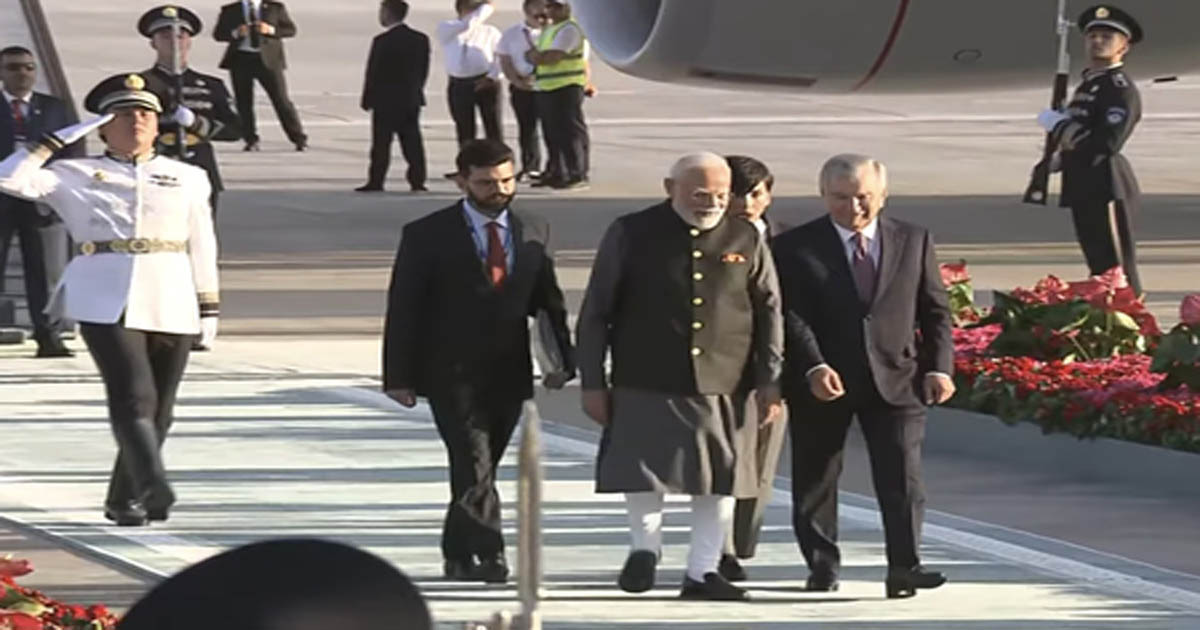
Tashkent, Aug 29: Prime Minister Narendra Modi arrived in Tashkent Saturday evening, kicking off his two-day State Visit to the Central Asian nation. In a special gesture, Uzbekistan President Shavkat Mirziyoyev received PM Modi at the airport, highlighting the friendship between both countries that has grown immensely over the last 12 years.
During his visit, PM Modi will hold delegation-level talks with President Mirziyoyev, advancing the shared developmental visions of Viksit Bharat 2047 and Uzbekistan-2030.
“In recent years, India-Uzbekistan Strategic Partnership has seen significant advancement. I look forward to my discussions with President Mirziyoyev on further deepening our cooperation in trade and investment, digital connectivity, defence, energy, and on advancing our shared visions of Viksit Bharat and Yangi Uzbekistan,” PM Modi said in his departure statement.
Prime Minister Modi said that he will also visit the Shastri Memorial and the Mahatma Gandhi Centre at the Tashkent State University of Oriental Studies, which he called “a tribute to the close cultural and people-to-people ties” that bind India and Uzbekistan together.
People of Uzbekistan have been eagerly looking forward to welcoming PM Modi in Tashkent and hope that his visit will add new momentum to the friendly ties between both countries.
“Welcome Hon’ble Prime Minister of India, Narendra Modi. We Uzbek people are very happy to hear the news of your arrival. We wish that the friendly ties between the two countries keep on growing…..Jai Hind, Jai Bharat, Jai Uzbekistan,” an Uzbek woman said ahead of PM Modi’s arrival.
This will be PM Modi’s fourth visit to Uzbekistan. He had earlier visited Uzbekistan and other Central Asian countries in 2015, followed by visits in 2016 and 2022 to attend the Shanghai Cooperation Organisation (SCO) Summits.
India and Uzbekistan have maintained extensive and fruitful engagements both in bilateral and multilateral formats over the past many years. The Uzbek President visited India for a State Visit in 2018, and he also participated in the Vibrant Gujarat Global Summit in 2019.
From Tashkent, PM Modi will travel to Bishkek at the invitation of Kyrgyzstan President Sadyr Zhaparov to participate in the 26th SCO Summit, marking 25 years of the organisation.

Maha govt committed to stable life for denotified tribes: Dy CM

Gujarat extends ban on tobacco-laced gutkha, pan masala for another year

Drunk Dial 112 driver hits cyclist, motorcycle in Bihar’s Muzaffarpur

2.07 crore voters not permanently omitted: Maha CEO on SIR

Political recommendations for 225 transfers in Mumbai Municipal Corporation, Eknath Shinde tops and Ramdas Athawale second

Four more Indian nationals rescued in Nepal, 120 cross safely from China: MEA

Nepal floods: First batch of 106 stranded Maharashtra tourists reaches India; 84 more expected today (Ld)

India, Brazil sign ICT MoU to deepen digital, telecom cooperation

Maharashtra: 17-year-old boy dies by suicide on Raksha Bandhan after emotional social media posts

Sensex ends flat, Nifty gains marginally as oil surge, US-Iran tensions weigh
-

 Crime4 years ago
Class 10 student jumps to death in Jaipur
-

 Maharashtra2 years ago
Mumbai Local Train Update: Central Railway’s New Timetable Comes Into Effect; Check Full List Of Revised Timings & Stations
-

 Maharashtra2 years ago
Mumbai To Go Toll-Free Tonight! Maharashtra Govt Announces Complete Toll Waiver For Light Motor Vehicles At All 5 Entry Points Of City
-

 Maharashtra2 years ago
False photo of Imtiaz Jaleel’s rally, exposing the fooling conspiracy
-

 National News2 years ago
Ministry of Railways rolls out Special Drive 4.0 with focus on digitisation, cleanliness, inclusiveness and grievance redressal
-

 Maharashtra2 years ago
Maharashtra Elections 2024: Mumbai Metro & BEST Services Extended Till Midnight On Voting Day
-

 National News2 years ago
J&K: 4 Jawans Killed, 28 Injured After Bus Carrying BSF Personnel For Poll Duty Falls Into Gorge In Budgam; Terrifying Visuals Surface
-

 Crime2 years ago
Baba Siddique Murder: Mumbai Police Unable To Get Lawrence Bishnoi Custody Due To Home Ministry Order, Says Report