
Business
‘1st Bullet Train To Run On 15th August, 2027’: Railway Minister Ashwini Vaishnaw Shares BIG Update On Mumbai–Ahmedabad High Speed Rail Corridor

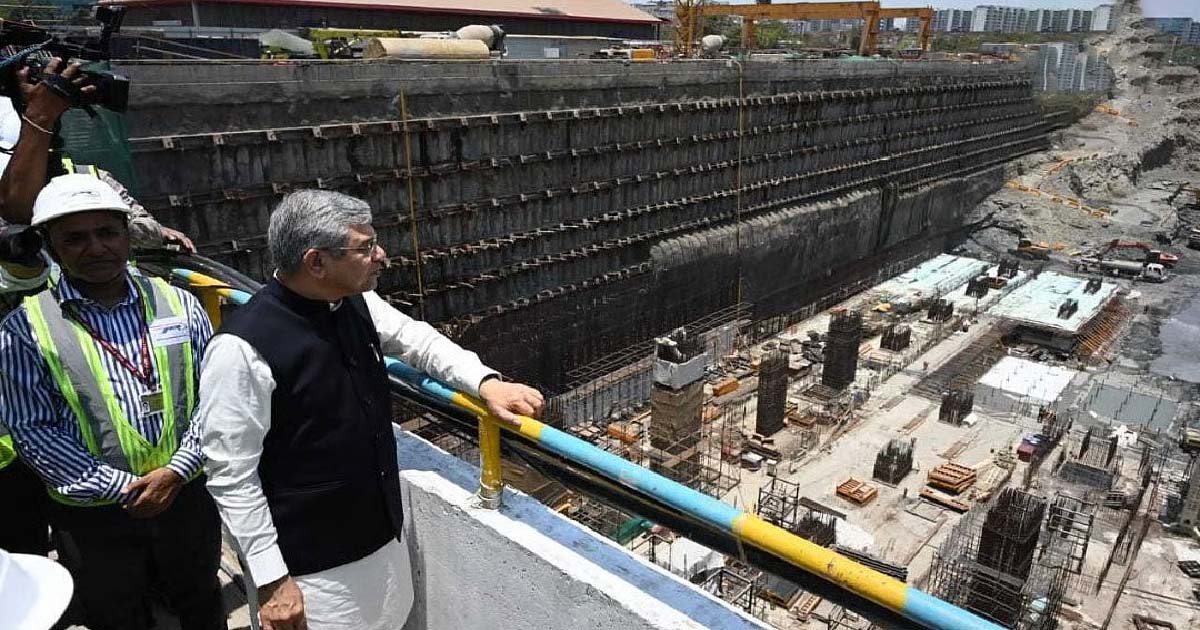
Mumbai: The work on India’s ambitious Mumbai-Ahmedabad Bullet Train Project is progressing at full pace, and the Centre has now announced a long-awaited timeline. Union Railway Minister Ashwini Vaishnaw on Thursday said that the country’s first bullet train will begin operations on August 15, 2027, marking a major milestone in India’s railway modernisation journey.
The announcement has brought clarity to a question many citizens have been asking, when will India finally see its first bullet train in operation. The high-speed rail project, which is currently under construction, is expected to majorly reduce travel time between Mumbai in Maharashtra and Ahmedabad in Gujarat and introduce global standards of rail infrastructure in the country.
Meanwhile, Vaishnaw also introduced India’s first Vande Bharat sleeper train, which will soon begin service on the Guwahati–Kolkata route. The train will be flagged off by Prime Minister Narendra Modi in the coming days, the minister said.
Vaishnaw said the Vande Bharat sleeper train has successfully completed its testing and certification process. Highlighting its importance, he said the new service will offer world-class facilities, enhanced safety and a modern travel experience for passengers undertaking long-distance overnight journeys.
“The complete testing and certification of the Vande Bharat sleeper train has been completed. Its first route is proposed to be Guwahati–Kolkata. Prime Minister Narendra Modi will flag off the first Vande Bharat sleeper train on this route in the coming days. This achievement is a major milestone,” Vaishnaw said.
On December 30, 2025, the railway minister shared a video on social media platform X showing the sleeper version of the Vande Bharat train undergoing high-speed trials. The video demonstrated the train’s stability as its speed increased from 178 kmph to 180 kmph within seconds.According to the Railway Ministry’s year-end review, the Vande Bharat sleeper trains are expected to revolutionise long-distance rail travel in India. Initially, the trains will be introduced on busy routes and later expanded across the network, significantly cutting travel time.
The Vande Bharat sleeper trains are manufactured by BEML Limited using technology developed by the Integral Coach Factory (ICF). Each train consists of 16 coaches, including AC First Class, AC 2-Tier and AC 3-Tier coaches, with a total passenger capacity of 1,128. With a top speed of 180 kmph, the Vande Bharat sleeper ranks among the fastest overnight trains in the country.
Currently, Indian Railways operates semi-high-speed Vande Bharat trains with a design speed of 180 kmph and a maximum operational speed of 160 kmph. The sleeper version aims to combine the comfort of the Rajdhani Express with advanced modern technology, offering a new standard for overnight rail travel in India.

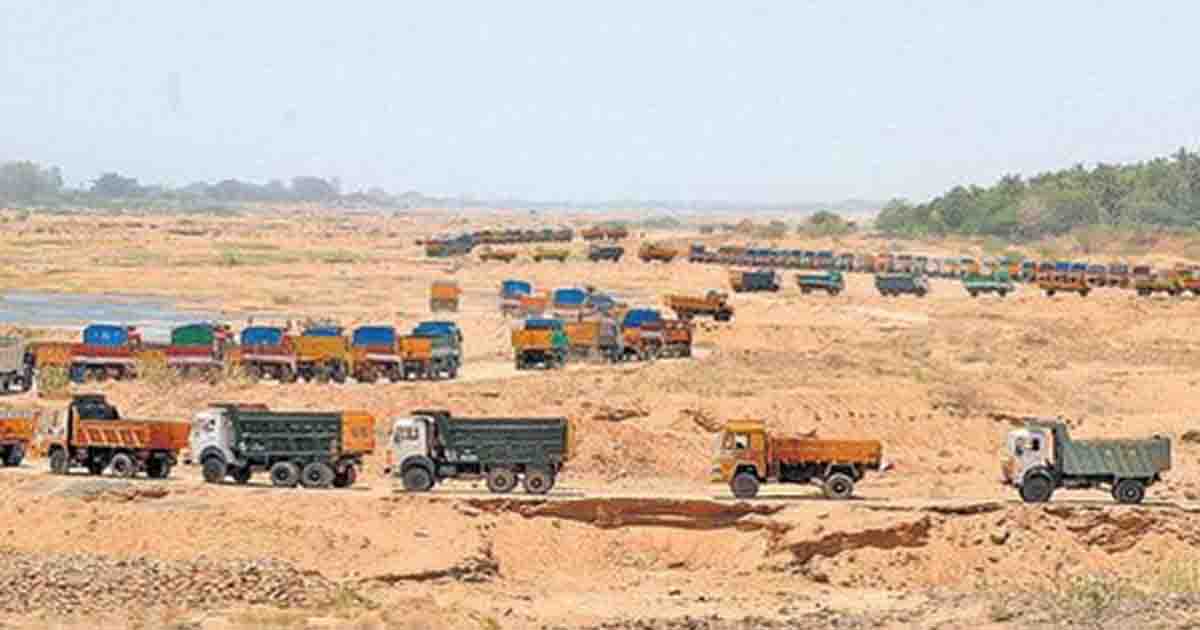
Chennai, Oct 6: Nearly four out of five trucks registered to transport construction minerals in Tamil Nadu remain without GPS tracking devices, prompting another extension of the installation deadline despite a Madras High Court order aimed at tightening monitoring of mineral movement.
Only 30,000 of the 1.4 lakh trucks registered on the Mineral Management System (MIMAS) portal had vehicle location-tracking devices as of September 30. The remaining 79 per cent are yet to comply with the requirement to cover vehicles carrying M-sand, P-sand and other construction aggregates.
The Geology and Mining Department has now extended the deadline to October 31, following representations from transport associations seeking additional time. The original March 31 deadline had already been extended, while the government had separately announced that vehicles without GPS devices would stop receiving mineral transit passes from September 1.
Linking vehicle trackers to MIMAS is intended to strengthen oversight of mineral transportation by recording where trucks load material and tracking their movement. Such records could help authorities identify supplies originating from unauthorised quarries and investigate illegal extraction and transport violations.
However, the slow rollout has drawn criticism from lorry owners, who have questioned the government’s commitment to enforcing the system. G. Ganesh, general secretary of the Tamil Nadu State Lorry Owners Federation, said the cost of tracking devices had fallen sharply, from Rs 15,000 to Rs 3,700.
He said several vendors could supply more than one lakh devices meeting the AIS-140 standard, arguing that availability should not justify further delays.
The government’s reluctance to implement the requirement raised questions about its resolve to curb illegal mining, he said.
Department officials, however, said the approximately 37 authorised suppliers lacked sufficient stocks to equip all remaining vehicles within a short period.
An official said the latest extension followed requests from several associations. Officials also said action was being taken against people generating fraudulent mineral transit passes with fake QR codes.
A dedicated number for complaints about quarrying violations would soon be introduced and linked to the department’s control room in Chennai.
The enforcement challenge comes amid a substantial gap between construction demand and authorised quarry output.
Official estimates put Tamil Nadu’s average daily requirement for construction aggregates at around 5.25 lakh units, compared with permitted quarry production of only 1.2 lakh units, highlighting the need for closer regulatory scrutiny.
Business
Navi Mumbai Airport expands inflight catering capacity with ‘TajSATS’ ahead of winter season

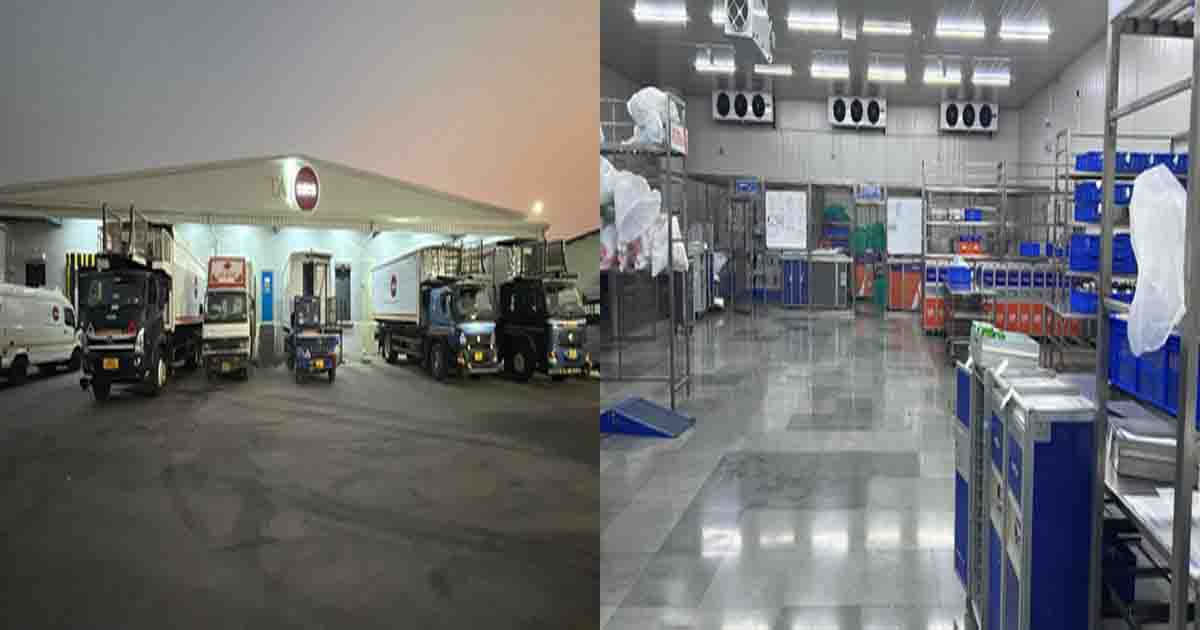
Mumbai, Oct 6: Navi Mumbai International Airport (NMIA) on Tuesday said that its dedicated inflight catering facility — operated by aviation catering company TajSATS — is prepared to support growing airline operations ahead of the Winter 2026-27 schedule, which runs from October 25 to March 27, 2027.
Located within the airport precinct, the flight kitchen currently serves more than 40 departing flights daily and has the capacity to produce up to 7,500 meals a day.
Moreover, the facility can be expanded to produce 15,000 meals daily as airline movements and passenger traffic increase.
“As NMIA expands its airline network, it is important that our supporting infrastructure grows with it,” said Subhash Murikenchery, Chief Airport Officer, Navi Mumbai International Airport.
“The TajSATS flight kitchen gives airlines the flexibility to meet rising demand and enhances the culinary experience for passengers,” he added.
The facility features production infrastructure, refrigeration systems and operational processes designed to respond to changes in airline schedules and demand.
Its location within the airport precinct is intended to facilitate meal delivery to departing aircraft.
NMIA said the facility provides local meal-uplift capabilities for international carriers operating to and from India, offering airlines an additional catering option closer to their point of departure.
“Approximately 40 per cent of international carriers operating from India rely on back catering from their own flight kitchens. NMIA’s inflight catering infrastructure has been developed to support this requirement, alongside the catering needs of domestic carriers,” according to the airport.
The catering infrastructure at NMIA has been developed to support those requirements alongside the needs of domestic carriers.
In addition, the facility offers catering services for both domestic and international airlines and can accommodate a range of dietary requirements, including special meals, allergen-sensitive menus and halal meals.
NMIA said the kitchen complies with food safety and quality standards including Hazard Analysis and Critical Control Points (HACCP), ISO 22000 and regulations of India’s Food Safety and Standards Authority.
TajSATS — which has operated in the aviation catering sector for more than four decades — also runs the flight kitchen at Mumbai’s Chhatrapati Shivaji Maharaj International Airport.
The airport said the facility is already operational and designed to scale in line with future growth in airline connectivity and passenger volumes.

Mumbai, Oct 6: Indian equity benchmarks opened higher on Tuesday amid positive global cues and buying in private banking stocks.
Nifty opened at 22,603.25, an increase of 47.50 points or 0.21 per cent.
Meanwhile, Sensex opened at 72,508.05, up 125.58 points or 0.17 per cent.
Private banks led sectoral gains in early trade as Nifty Private Bank rose 0.75 per cent.
Nifty MidSmall IT & Telecom index gained 0.5 per cent, while the metal index advanced 0.32 per cent.
Notably, chemical, energy, financial services and cement were also trading higher, while PSU banks and FMCG were largely flat.
On the losing side, Nifty Auto fell 0.4 per cent, followed by healthcare, pharma and consumer durables indices. Realty, IT and media indices were also marginally lower.
Market experts said the near-term tone remained cautiously constructive, supported by a firm opening and improved global cues, although the broader setup remained tentative following the recent decline.
Analysts said a sustained recovery in the opening hours, backed by broader market participation, would be important to determine whether the current bounce can extend.
The market could remain in a ‘sell on rally’ mode as elevated US bond yields were likely to keep foreign institutional investors (FIIs) selling, even as domestic institutional investors (DIIs) continued to support large-cap stocks amid strong fund inflows, according to them.
The experts said a sustained market rally would require a sharp decline in crude oil prices, although there was currently no clear indication of such a move.
On the technical front, analysts see 23,100-23,220 as near-term objectives, with 22,800 likely to pose an intermediate hurdle.
A failure to move above the 22,555-22,615 band could signal further consolidation, while the downside is expected to remain limited around 22,050 for now.
Additionally, FIIs remained net sellers in Indian equities, offloading shares worth Rs 4,699 crore on Monday. DIIs provided support, making net purchases of Rs 5,181 crore.
In addition, Asian shares traded higher in early hours after a technology-led rally propelled the Nasdaq to a fresh record high.

INDIA bloc protest: MPs try to push open gates of Akashvani Bhawan

As large number of mineral transporting trucks lack GPS, TN extends deadline to October 31

Karnataka: Convict’s wife’s complaint exposes alleged sexual exploitation, forged SC order release racket

Navi Mumbai Airport expands inflight catering capacity with ‘TajSATS’ ahead of winter season

‘Not eyeing 3 but 403 seats’: Akhilesh’s cryptic tweet creates stir, raises suspense on 3rd RS seat

Gift to President Putin part of PM Modi bid to globally display India’s heritage

PM Modi’s warm camaraderie with Putin, Xi on full display at BRICS Summit

Corporators of all parties in trouble! Corporators of all major parties including Shiv Sena (UBT), BJP and Congress are facing legal challenges.

Complaint against Netflix & Mukesh Chhabra for inappropriate language on ‘India’s Got Latent 2’

Maha Congress stages agitation against Gyanesh Kumar
-

 Crime4 years ago
Class 10 student jumps to death in Jaipur
-

 Maharashtra2 years ago
Mumbai Local Train Update: Central Railway’s New Timetable Comes Into Effect; Check Full List Of Revised Timings & Stations
-

 Maharashtra2 years ago
Mumbai To Go Toll-Free Tonight! Maharashtra Govt Announces Complete Toll Waiver For Light Motor Vehicles At All 5 Entry Points Of City
-

 Maharashtra2 years ago
False photo of Imtiaz Jaleel’s rally, exposing the fooling conspiracy
-

 National News2 years ago
Ministry of Railways rolls out Special Drive 4.0 with focus on digitisation, cleanliness, inclusiveness and grievance redressal
-

 Maharashtra2 years ago
Maharashtra Elections 2024: Mumbai Metro & BEST Services Extended Till Midnight On Voting Day
-

 National News2 years ago
J&K: 4 Jawans Killed, 28 Injured After Bus Carrying BSF Personnel For Poll Duty Falls Into Gorge In Budgam; Terrifying Visuals Surface
-

 Crime2 years ago
Baba Siddique Murder: Mumbai Police Unable To Get Lawrence Bishnoi Custody Due To Home Ministry Order, Says Report