
Crime
15 years on the run: Delhi Police arrest 72-year-old proclaimed offender in extortion case

New Delhi, Aug 22: In a major breakthrough against long-evading fugitives, the Special Cell of the Delhi Police on Saturday arrested a proclaimed offender who had been absconding for nearly 15 years in connection with an extortion case, officials said on Saturday.
The accused, identified as 72-year-old Hari Singh Shekhawat, a resident of Rajasthan’s Jaipur, was arrested by a team of the South-Western Range (SWR) of the Special Cell following an extensive inter-state search spanning Delhi, Haryana, Gujarat and Rajasthan.
The case dates back to 2008, when Shekhawat allegedly attempted to extort money from a prominent multinational garment company while he was employed with the firm. Following the incident, a case was registered against him at the Special Cell police station under Sections 384, 389, 506 and 511 of the Indian Penal Code (IPC).
According to officials, Shekhawat subsequently failed to appear before the court on multiple occasions and continued to evade the legal proceedings. Due to his persistent non-appearance, the court declared him a Proclaimed Offender on April 2, 2016.
In view of the recent efforts to track down absconding criminals and fugitives involved in sensational crimes, a team of the SWR/Special Cell was constituted to pursue such offenders and prevent them from committing further crimes.
The team was led by Inspector Sandeep Yadav and Inspector Neeraj Kumar under the supervision of ACP Puran Chandra Pant. The officers deployed extensive human surveillance and conducted sustained efforts to establish the whereabouts of criminals who had been evading arrest for prolonged periods.
“Consequent to the rigorous groundwork for more than one month, it was established that initially, he had shifted to Gujarat to avoid legal proceedings in this case and later on, shifted to Rajasthan,” officials said.
Investigators found that Shekhawat had initially moved to Gujarat in an attempt to avoid the legal proceedings arising from the extortion case. He subsequently shifted to Rajasthan, where he remained under the radar and continued to evade arrest for several years.
On August 13, the Special Cell team received credible information that the absconder was hiding in Jaipur, Rajasthan, in an attempt to avoid being arrested in the long-pending case.
Following the information, a dedicated raiding team was immediately formed and sent to Jaipur.
The police team carried out an intensive search operation in Jaipur and eventually confirmed that the accused was residing inside a residential society in the city. After verifying his presence and establishing his identity, the team apprehended Shekhawat from the residential premises.
The accused was subsequently arrested in accordance with the provisions of law, officials said, bringing to an end his prolonged period of evasion from the authorities.
Police officials said the arrest was the result of sustained surveillance, intelligence gathering and coordinated efforts across multiple states to locate the accused, who had repeatedly changed his place of residence to remain away from the legal process.
Hari Singh Shekhawat is a graduate of XLRI and has worked with several renowned multinational corporations in senior positions during his professional career.
According to officials, he was working with a prominent garment multinational company when he allegedly attempted to extort money from the firm in 2008.

Crime
ED freezes 1,424 bank accounts, attaches properties worth Rs 17.82 crore in drug-linked money-laundering cases

The Enforcement Directorate (ED) has conducted coordinated searches across Mizoram and Manipur under the Prevention of Money Laundering Act (PMLA) in three cases linked to cross-border drug trafficking from Myanmar and narco-hawala operations, the central probe agency said on Sunday.
The ED said that the searches were carried out in coordination with the Narcotics Control Bureau (NCB) and the Mizoram Police.
As part of the crackdown, the ED froze 1,424 bank accounts and provisionally attached properties worth Rs 17.82 crore, taking the total value of assets secured in the cases to over Rs 26 crore. Six accused have been arrested, while proceedings for the arrest of four more are underway.
An official statement said that the ED’s Aizawl and Imphal Sub-Zonal offices, on October 23, conducted coordinated search operations under the PMLA at multiple premises in Aizawl, Champhai and Lawngtlai in Mizoram, and Churachandpur in Manipur. The operation was conducted in three cases of money laundering arising from cross-border trafficking of heroin, brown sugar and methamphetamine tablets from Myanmar and the hawala settlement of the drug proceeds.
The operation was conducted in coordination with the Narcotics Control Bureau (NCB) and the Mizoram Police, which carried out parallel action against the trafficking network on the same day.
During the action, ED froze 1,424 bank accounts connected to narco-trade and narco-hawala operators in Mizoram and Manipur and provisionally attached properties worth Rs 17.82 crore belonging to narco-hawala operators based in Mizoram.
ED had earlier secured assets worth Rs 8.19 crore in the form of frozen bank accounts, taking the total assets secured to over Rs 26 crore. Six accused persons were arrested under Section 19 of PMLA during searches — three in Mizoram and three in Manipur. Production-for-arrest applications against four more accused, presently in judicial custody in narcotics cases, are being processed before the Special Court in Mizoram.
The ED investigation was initiated in three cases on the basis of FIRs under the NDPS Act, 1985. According to the statement, the investigation in the three cases has exposed one interconnected narco-hawala ecosystem in which the same set of bank accounts in Champhai, Aizawl and Lawngtlai in Mizoram received drug money generated in Manipur, Mizoram, Assam and Tripura and settled it with suppliers in Myanmar.
The Northeast region, sharing a 1,643 km porous border with Myanmar, has emerged as the principal land corridor for drugs produced in the Golden Triangle. Heroin and methamphetamine tablets entering Mizoram and Manipur are consumed locally and moved onward through Assam to the rest of India and Bangladesh, and the drug money generated across this chain flows back to the border towns of Mizoram for settlement with the Myanmar-based suppliers, the statement noted.
The trafficking corridor works as a two-way street through the Champhai-Zokhawthar sector of Mizoram. In one direction, precursor and cutting chemicals move from India to Myanmar — M/s Krishiv Enterprises dispatched about 32 tonnes of Caffeine Anhydrous in 15 consignments between March and November 2024, besides 10 tonnes of Aluminium Chloride Anhydrous, on regular E-way bills and GST invoices to small retail pharmacies and a general store in Aizawl and the border belt of Mizoram that have no manufacturing or processing facility of their own.
From these front consignees, the chemicals are moved onward across the border to the tablet-pressing units in Myanmar, where Caffeine Anhydrous is used to bulk and cut methamphetamine into the “Yaba” tablets. In the other direction, the finished heroin, brown sugar and methamphetamine tablets produced in Myanmar are carried across the Tiau river at Zokhawthar, the border crossing opposite Khawmawi in Myanmar, and staged at Champhai, from where they travel down the Champhai-Aizawl road and National Highway-06A to Aizawl, Vairengte and the Assam and Tripura borders.
Myanmar-based organisers such as Runthanchhungi alias Nu Sungi and Chintuang hire local carriers in Zokhawthar and Champhai, move consignments concealed in soap cases, taxis, motorcycles and truck convoys with escort vehicles, and are paid through the same Champhai hawala accounts that receive the drug money from across the North-East, so that the chemical supply, the drug flow and the money trail all converge on the Champhai-Zokhawthar corridor.
That money trail begins far from bordering Champhai. The drugs that leave the corridor are sold for cash across Manipur, Assam, Tripura and in other parts of India, with the cash moved through hawala, and the sale proceeds have to be gathered up and sent back to the suppliers in Myanmar.
In the Churachandpur sector of Manipur, this cash was collected by syndicate operatives such as Nengzatuan Valte, alias Tuanpi and handed to cash handlers like Zenngaihniang, alias Taniang, from whose hands it entered the banking system through Mini-ATM/Customer Service Point counters. Taniang delivered up to Rs 1 crore per day at M/s Go Alpha Trip, a Mini-ATM and money-transfer counter in Churachandpur run by H. Gouzalal, along with a list of beneficiary accounts. Recording her under the code name “NUNIANG”, the counter made 2,947 transfers aggregating Rs 175.03 crore between 2024 and June 2026 to traders, pharmacies and individuals in Zokhawthar, Champhai, Lawngtlai and Aizawl, routing part of the money through other Churachandpur counters and front entities to break the trail.
The beneficiary pharmacies, general stores and individuals in Mizoram, who rented their accounts for Rs 500 per lakh, passed the money on within days through RTGS/NEFT/IMPS with negligible cash withdrawals and no underlying trade.
Of the Rs 11.98 crore received in seven accounts analysed, only Rs 17 lakh was withdrawn in cash. The account of a Champhai homemaker, operated by her bank-employee husband, alone received Rs 15.48 crore against a family income of about Rs 27,000 per month.
The layered funds finally reach unlicensed Rupee-Kyat exchangers in Champhai, chiefly Lalrampari and her husband Lalliansanga (Proprietor of M/s JTS Store), whose accounts recorded credits of about Rs 268.80 crore, including Rs 125 crore in cash from Assam, Nagaland, West Bengal, Tripura and Delhi.
Significantly, the drug money reaching the hawala accounts in Aizawl and Champhai did not come from the Northeast alone. The accounts received substantial funds from New Delhi, Kolkata and Mumbai, including about Rs 2.14 crore received by hawala operator Lalrinkima from shell entities based in Kolkata and Rs 10 lakh received by Taniang from a Howrah-based (Kolkata) shell company, besides cash deposited at Delhi, Kolkata, Guwahati and Silchar into accounts of Champhai-based operators, indicating that proceeds of drugs sold in the metropolitan cities were being routed back to the border through layered corporate and hawala channels.
On instructions from Myanmar-based persons, they transferred the money to accounts across India and settled the suppliers’ dues in Kyat across the border for a commission of Rs 250-500 per lakh. The proceeds were integrated into real estate and businesses, including Hotel JTS, a five-storey commercial building in Zion Veng, Champhai, built out of funds routed through hawala accounts.
Searches covered the premises of hawala operators, mule-account holders, front businesses and the Mini-ATM counter in Champhai, Aizawl, Lawngtlai and Churachandpur, and bank branches holding the key accounts.
Incriminating ledgers of cash received and transfers made, cheque books, debit cards, mobile phones and digital devices used to operate the accounts were seized. Account holders admitted that their accounts were rented to suspected narco-hawala operators for Rs 500 per lakh. The ledgers of Go Alpha Trip, Churachandpur, matched the credits in the Mizoram accounts under investigation in the two Aizawl cases — Thangkhuala and his wife (Rs 2.22 crore), Zuali Drugs Store (Rs 2.67 crore), Fung Than Kimi (Rs 2.05 crore), Lalbiakhluna Lalduhawma (Rs 1.82 crore) and Lalrampari establishing that the drug cash collected in Manipur was being settled through the same Champhai hawala accounts that service the heroin and methamphetamine networks of Mizoram.
Six accused were arrested under Section 19 of PMLA during the searches, including Kashyap G. Thakkar, Thangkhuala, T. Chatuan Vanlalgakha, all in Mizoram; Zenngaihniang alias Taniang, Nengzatuan Valte alias Tuanpi and H. Gouzalal, all of Churachandpur, Manipur.
Taniang and Tuanpi, already in judicial custody in the NDPS cases, were formally arrested with the permission of the Special Judge, ND&PS, Churachandpur. The arrested persons are being produced before the jurisdictional Special Courts (PMLA).
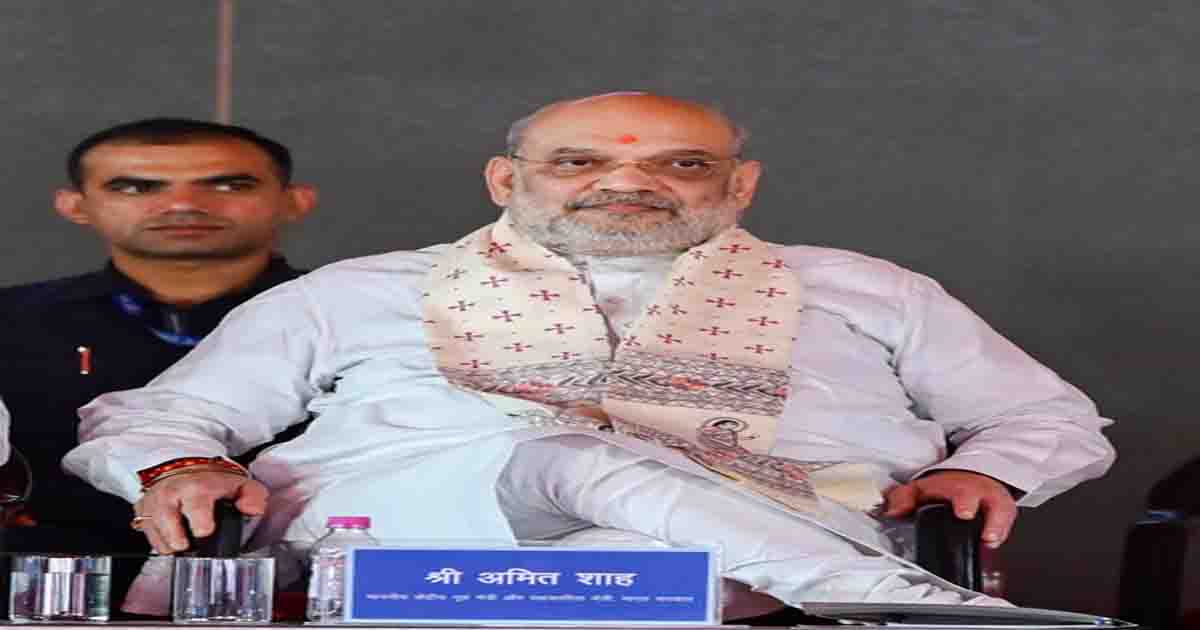
Anti-narcotics agencies conducted coordinated operations across Assam, Mizoram and Manipur under ‘Operation Trident’, dismantling an international narco-cartel and arresting 18 people, the Central government announced on Sunday.
Union Home Minister Amit Shah announced the success of the operation in a post on X, describing it as another major action against drug trafficking.
“Modi Govt deals another lethal blow against drugs with Operation Trident,” he said.
“Our agencies launched a barrage of simultaneous crackdowns across 38 locations in Assam, Mizoram and Manipur on 23 October, smashing an international narco-cartel,” HM Shah said, highlighting the scale of the coordinated crackdown carried out by the agencies across the three northeastern states.
According to the Home Minister, the operation exposed hawala transactions worth Rs 100 crore and resulted in the freezing of 1,424 bank accounts.
Authorities also attached properties valued at Rs 17.82 crore, seized 500 detonators and Rs 12 lakh in cash, and arrested 18 people in connection with the operation.
“The network trafficked narcotics across the borders of India, Myanmar and Bangladesh through the Death Triangle Corridor. The offensive attests to India’s Himalayan resolve to realise the mission of eradicating every drug network by 31 December 2029. India will hammer until the last nail is driven into the coffin of drug cartels,” he said.
“Heartiest congratulations to the anti-narcotics team comprising central agencies and police forces of the three states,” the Home Minister added, congratulating the personnel involved in the coordinated operation.
Earlier on October 21, speaking at Police Commemoration Day in New Delhi, HM Shah announced that the Union Home Ministry has decided that during the remaining part of 2026, as well as in 2027, 2028 and 2029, a united fight will be waged against drugs over the next three-and-a-half years, and the country will be free from the drug problem by December 31, 2029.
“This is a very important goal for us, even more important than tackling the three hotspots. The drug problem hollows out our future generations, places an undue burden on our economy and provides financial support to organisations engaged in anti-national activities,” HM Shah said.
“Today, I want to call upon police forces across the country to wholeheartedly work towards achieving the goal of a drug-free India, following the roadmap we have prepared and the target set by our respected Prime Minister Narendra Modi, so that we can protect our future generations,” he added.
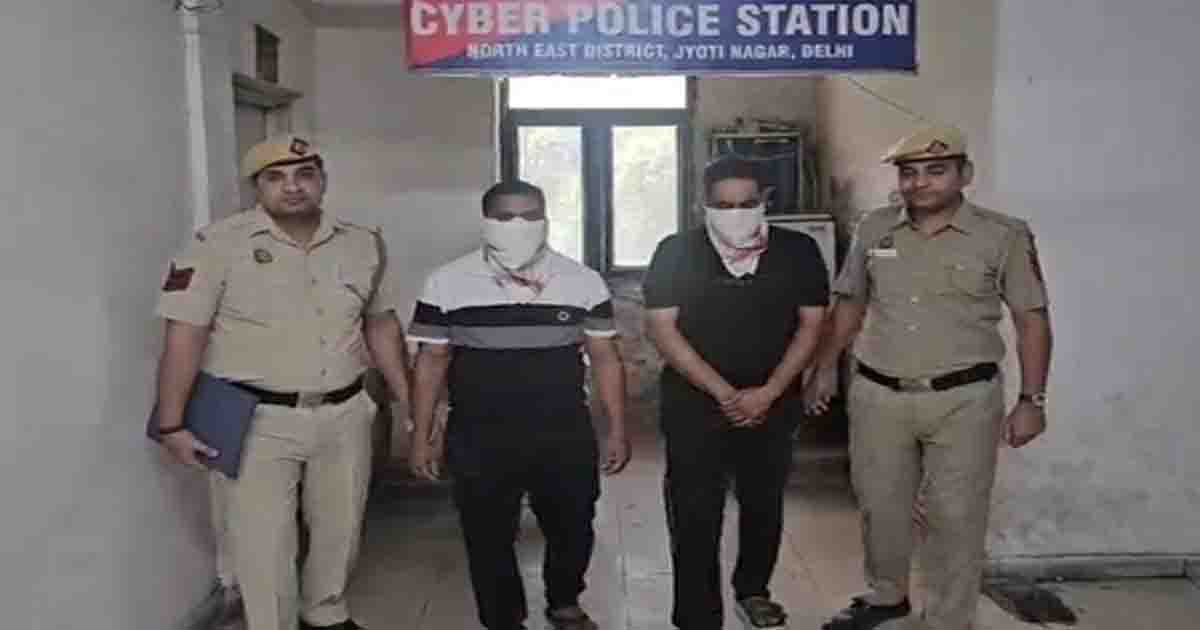
The Cyber Police Station of Delhi North-East District has arrested two men for their alleged involvement in a mule bank account that received Rs 98,592 linked to a Rs 2.10 crore digital-arrest cyber fraud case.
The police recovered four mobile phones, six debit cards and 10 chequebooks from the accused.
The arrested men have been identified as Sonu Khan (36), a resident of Ghaziabad, Uttar Pradesh, and Arjun Chaudhary (38), a resident of Ram Nagar in Shahdara, Delhi. According to police records, neither accused has any previous criminal involvement.
According to the police, the case came to light during the scrutiny of complaints registered on the National Cyber Crime Reporting Portal (NCRP). One complaint was shortlisted for verification, during which investigators discovered that a suspected mule bank account operating in Yamuna Vihar, Delhi, had received Rs 98,592 on October 12.
Examination of the bank transactions revealed that Rs 49,000 had been withdrawn from the account on October 12, while the remaining amount had been withdrawn through a cheque.
Further investigation established that the transaction was linked to E-FIR No. 0170/2026, dated October 15, registered at the Special Cell’s IFSO unit in Delhi under Sections 318(4), 319 and 340 of the Bharatiya Nyaya Sanhita (BNS).
The case was registered following a complaint by Pratibha Jain, a resident of Janakpuri, Delhi, who reported being cheated of approximately Rs 2.10 crore by cyber fraudsters in a so-called “digital arrest” scam.
During the investigation, the bank account that had received a portion of the alleged fraud proceeds was suspected to have been used as a mule account to route money obtained through cybercrime.
Through technical surveillance and sustained investigation, the police traced the account holder, Sonu Khan, in Ashok Nagar, North-East Delhi. He was allegedly operating a shop dealing in disposable items.
During the proceedings, the police recovered three mobile phones, 10 chequebooks and six debit cards belonging to different banks from Khan’s possession.
Khan allegedly disclosed during interrogation that he was working for Arjun Chaudhary, who had facilitated the establishment of the shop.
Acting on information gathered during the investigation, the police apprehended Chaudhary, 38, a resident of Gali No. 3, Ram Nagar, Shahdara, Delhi. One mobile phone was recovered from his possession.
Further investigation is in progress.

PM Modi inaugurates new garment manufacturing facility in Varanasi, interacts with workers

ED freezes 1,424 bank accounts, attaches properties worth Rs 17.82 crore in drug-linked money-laundering cases

Rename party from ‘Samajwadi’ to ‘AI-vadi’: OP Rajbhar to Akhilesh Yadav

Op Trident busts international narco-cartel in Northeast, 18 arrested: Amit Shah

Delhi Police arrest two in Rs 2.10 crore cyber fraud case

Rahul, Cong ecosystem want to force regime change: BJP after Neha Bora praises B’desh Gen-Z protest

BJP pays tribute to ex-President Abdul Kalam, recalls his enduring influence on generations of India’s youth

Attack on democratic rights: INDIA Bloc leaders on detentions of anti-ECI protestors

INDIA bloc begins protest march against ECI

Maha Congress stages agitation against Gyanesh Kumar
-

 Crime4 years ago
Class 10 student jumps to death in Jaipur
-

 Maharashtra2 years ago
Mumbai Local Train Update: Central Railway’s New Timetable Comes Into Effect; Check Full List Of Revised Timings & Stations
-

 Maharashtra2 years ago
Mumbai To Go Toll-Free Tonight! Maharashtra Govt Announces Complete Toll Waiver For Light Motor Vehicles At All 5 Entry Points Of City
-

 Maharashtra2 years ago
False photo of Imtiaz Jaleel’s rally, exposing the fooling conspiracy
-

 National News2 years ago
Ministry of Railways rolls out Special Drive 4.0 with focus on digitisation, cleanliness, inclusiveness and grievance redressal
-

 Maharashtra2 years ago
Maharashtra Elections 2024: Mumbai Metro & BEST Services Extended Till Midnight On Voting Day
-

 National News2 years ago
J&K: 4 Jawans Killed, 28 Injured After Bus Carrying BSF Personnel For Poll Duty Falls Into Gorge In Budgam; Terrifying Visuals Surface
-

 Crime2 years ago
Baba Siddique Murder: Mumbai Police Unable To Get Lawrence Bishnoi Custody Due To Home Ministry Order, Says Report