
Crime
12-year-old boy dies in B’luru residential school; family protests alleging assault by teacher


Bengaluru, July 8: A 12-year-old student of a residential school in Bengaluru died under suspicious circumstances on Wednesday, prompting allegations of assault by teachers and protests by his family members and relatives.
The deceased has been identified as Gurukiran, a Class 6 student at the prominent school located in Kadayarappanahalli village in Bengaluru North Taluk. He was the son of Raghavendra, a resident of Subedarpalya.
According to the school management, Gurukiran collapsed while jogging on the school campus early in the morning. School authorities informed his parents over the phone around 6 a.m., stating that he had fallen ill and had been shifted to a hospital. However, by the time the parents reached the hospital, the boy had died.
The bereaved family has alleged that Gurukiran was physically assaulted by teachers using iron rods and sticks, and claimed that the pressure exerted on him at the residential school led to his death.
Speaking to reporters, Gurukiran’s father, Raghavendra, said, “My son was admitted to this school when he was studying in Class 5. The school claims that he collapsed while jogging this morning. But when we reached the hospital, we found him dead. I suspect something happened inside the school. The teachers might have assaulted him or done something to him.”
He further alleged that another student informed the family that Gurukiran had been beaten with an iron rod while staying in the hostel. “We have been told that the physical education teacher assaulted him. The police are protecting the teacher,” he alleged.
Raghavendra said his son had never complained about any harassment or assault at the school. “He never shared any complaints with us. What could happen to a child studying in Class 6? I strongly suspect he was assaulted. The school called us at around 6 a.m., saying he had collapsed while jogging and that his pulse rate had dropped,” he said.
Following the incident, Gurukiran’s parents and relatives gathered outside the residential school and staged a protest against the management. They alleged that the boy had been beaten with sticks and iron rods and demanded a thorough investigation.
Personnel from the Bagalur Police Station rushed to the school and attempted to pacify the agitated family members and relatives.
Another relative, Yashasvini, alleged that the family was initially not allowed to see Gurukiran’s body after reaching the hospital.
“When we reached the hospital, we were not allowed to see the child’s body. We later learned that the school staff had taken him to another hospital. We don’t know what actually happened. When we asked the management for the CCTV footage, they claimed that the cameras were damaged and the footage was unavailable,” she said.
Questioning the school’s version, she added, “If he suffered a heart attack, there should have been some signs. They have not provided any proper explanation and are simply saying that he collapsed while jogging. He was perfectly healthy. During the summer vacation, he spent time with us and never had any health issues. He was never hospitalised before. How are we supposed to believe this?”
The family also questioned the school’s claim that Gurukiran completed two rounds of jogging before collapsing during the third one. They alleged that the management failed to provide CCTV footage from either the jogging area or the room where he was reportedly taken after collapsing.
“They are saying the CCTV footage is unavailable because the cameras were damaged. We found that the CCTV cameras had been removed and the wires had been cut. We suspect foul play. Other students have also told us that children are beaten in the school,” a relative alleged.
Tension prevailed at the school as angry parents allegedly assaulted the physical education teacher in the presence of police personnel. The police intervened and managed to rescue the teacher from the agitated crowd.
Police have launched an investigation to ascertain the exact cause of Gurukiran’s death. Further investigation is underway.
When contacted, the phone went unanswered at the residential school. The school is yet to react to the allegations.



Just days after a Class 12 student died after allegedly immolating herself in East Delhi, another student died by suspected suicide at her residence in Delhi’s Bharat Nagar area, police said on Tuesday.
The body of the Class 12 student was found at her home with a scarf tied around her neck, under the Bharat Nagar police station area. According to the investigators, a preliminary probe suggests it is a case of suicide.
The Bharat Nagar police have taken custody of the body and initiated an investigation into the matter.
Police said that some chat messages have surfaced during the initial probe, indicating that the girl had been under distress.
However, the case is being investigated from all possible angles.
The incident comes days after a Class 12 student died after allegedly pouring an inflammable substance on herself and setting herself on fire at Sarvodaya Bal/Balika Vidyalaya in East Delhi’s Krishna Nagar area.
The recovery of the student’s charred body at Sarvodaya Bal/Balika Vidyalaya triggered panic among teachers and students on the school premises, prompting the authorities to initiate an investigation into the circumstances surrounding the student’s death.
Officials said certain suspicious items were reportedly found in the student’s school bag. However, the nature of these items had not been officially confirmed at the time of filing the report.
According to officials, a Police Control Room (PCR) call reporting a fire incident was received from the school located in the Krishna Nagar area of Delhi’s Shahdara district.
“Upon receipt of the information, police staff from PS Krishna Nagar promptly reached the spot, where an approximately 18-year-old female student of Class 12th was found in a burnt condition behind the school guard room,” officials said.
They further stated that some materials were recovered during the initial proceedings at the scene and from the deceased student’s school bag. These items are being examined as part of the investigation.
The police said a Crime Team of the Delhi Police was called to the school to inspect the scene, examine the circumstances and collect relevant evidence that could help establish the sequence of events leading to the incident.
“The circumstances leading to the incident are being examined, and further enquiry is in progress,” the police said.
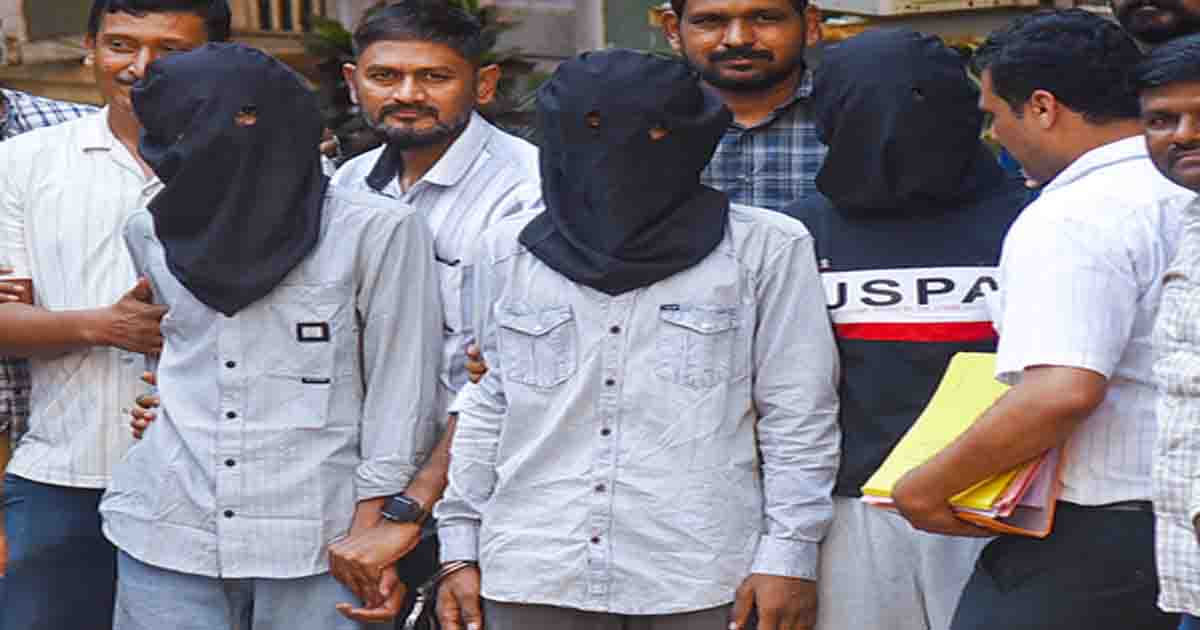
The Mumbai Police on Tuesday invoked stringent sections of the Maharashtra Control of Organised Crime Act (MCOCA) against all the accused arrested in connection with the firing incident involving Bollywood actor Tiger Shroff.
An official statement said that provisions of the Maharashtra Control of Organised Crime Act (MCOCA), 1999 have been invoked in DCB CID CR No. 143/26, registered on 19/10/26 u/Ss 109(1), 3(5) of BNS r/w sections 3, 25 of Arms Act; with permission of the competent authority under Section 23(1)(a) of the said Act dated 27/10/26.
Accordingly, Sections 3(1)(ii), 3(2) and 3(4) of MCOCA have been added to the case against all accused.
A case against the accused was registered by the Mumbai Police on October 19 under the Bharatiya Nyaya Sanhita (BNS) and the Arms Act.
Subsequently, the approval to invoke the MCOCA was granted on October 27. Police said that the investigation in the case has been expedited considering the organised crime background linked to it.
Further investigation into the case is currently underway.
Earlier, the Mumbai Crime Branch established the alleged motive behind the firing incident involving Tiger Shroff, stating that the attack was carried out with the objectives of extorting money, establishing the gang’s dominance and creating fear among the public.
According to the Crime Branch’s investigation, the accused allegedly involved in the firing incident have links to the Lawrence Bishnoi gang.
The police have alleged that the gang targeted Tiger Shroff as part of an attempt to strengthen its influence, intimidate people and secure financial gains through extortion.
The Mumbai Crime Branch has stated that the accused were allegedly operating as active members of an organised crime syndicate.
Investigators believe that the attack was not an isolated act but part of a planned criminal conspiracy intended to achieve financial benefits, assert the gang’s dominance and spread terror within society.
The accused carried out the attack using illegal and lethal weapons as part of a pre-planned conspiracy targeting the star.
The investigation has also revealed that the alleged conspiracy was coordinated through an inter-state network involving several locations, including Delhi and Mumbai.

One person has been arrested by Maharashtra Cyber in connection with a Rs 4.97 lakh online share market investment fraud case, officials said on Tuesday.
The complaint was filed by 42-year-old Kalyan, who was allegedly induced to invest money through an online trading application after being approached through a social media advertisement and a WhatsApp group operating under the name “Breakthrough Communication”, according to the officials.
As per the complaint, the fraud took place between August 25 and September 23, when Kalyan came across a social media advertisement referring to Susquehanna International Group and subsequently joined a WhatsApp group.
“A person using the name ‘Shikha Sharma’ allegedly contacted the complainant, provided investment-related guidance, and encouraged him to invest in the share market through a trading application. Believing the representations to be genuine, the complainant transferred a total amount of 4.97 lakh into eight different bank accounts,” officials said.
After suspecting financial fraud, Kalyan reported the matter through the National Cyber Crime Helpline 1930 on September 27.
Subsequently, an FIR was registered at the Nodal Cyber Police Station, Maharashtra Cyber, under Sections 318(4) and 319(2) of the Bharatiya Nyaya Sanhita (BNS), read with Sections 66(C) and 66(D) of the Information Technology (IT) Act.
Officials said that following this, Maharashtra Cyber initiated an investigation to trace the financial transactions and identify the persons involved in facilitating the fraud.
“During the investigation, the police examined the banking trail and the movement of the defrauded funds across multiple accounts. The investigation revealed that the money had moved through various bank accounts,” they added.
According to officials, further inquiry indicated that the funds received in an account belonging to Nikhil Kamble were allegedly withdrawn in cash and handed over to the arrested accused, Mohammed Ali Kapadia, through an intermediary arrangement.
Mohammed Ali Kapadia (23) appeared before the investigating officer on October 26. During questioning, his alleged role in receiving and disposing of cash linked to the fraudulent transactions came under investigation. He was subsequently arrested in connection with the case, officials said.
They added that the investigation further indicates that the accused may have acted in coordination with other persons to facilitate the withdrawal of money generated through cyber fraud.

True success of science lies in taking innovation from lab to land: PM Modi

Another Class 12 student found dead in Delhi; suicide suspected

ECI’s affidavit on SIR deceptive: Jairam Ramesh

Maha CM defends pumped storage project in Karjat amid environmental backlash

Waqf Property Report Pending for Three Years: Rais Shaikh Accuses NCP of Ignoring Muslim Community’s Issues

Rahul, Cong ecosystem want to force regime change: BJP after Neha Bora praises B’desh Gen-Z protest

Attack on democratic rights: INDIA Bloc leaders on detentions of anti-ECI protestors

BJP pays tribute to ex-President Abdul Kalam, recalls his enduring influence on generations of India’s youth

INDIA bloc begins protest march against ECI

Maha Congress stages agitation against Gyanesh Kumar
-

 Crime4 years ago
Class 10 student jumps to death in Jaipur
-

 Maharashtra2 years ago
Mumbai Local Train Update: Central Railway’s New Timetable Comes Into Effect; Check Full List Of Revised Timings & Stations
-

 Maharashtra2 years ago
Mumbai To Go Toll-Free Tonight! Maharashtra Govt Announces Complete Toll Waiver For Light Motor Vehicles At All 5 Entry Points Of City
-

 Maharashtra2 years ago
False photo of Imtiaz Jaleel’s rally, exposing the fooling conspiracy
-

 National News2 years ago
Ministry of Railways rolls out Special Drive 4.0 with focus on digitisation, cleanliness, inclusiveness and grievance redressal
-

 Maharashtra2 years ago
Maharashtra Elections 2024: Mumbai Metro & BEST Services Extended Till Midnight On Voting Day
-

 National News2 years ago
J&K: 4 Jawans Killed, 28 Injured After Bus Carrying BSF Personnel For Poll Duty Falls Into Gorge In Budgam; Terrifying Visuals Surface
-

 Crime2 years ago
Baba Siddique Murder: Mumbai Police Unable To Get Lawrence Bishnoi Custody Due To Home Ministry Order, Says Report